




A Feast of Power, A Crown of Supremacy Chinese Drama: Latest Counterattack & Underdog Rise Short Drama in December
Urban DramaBox
 2025-12-26
 374
374👑♟️From the Streets to the Throne: Why A Feast of Power, A Crown of Supremacy Chinese Drama Turns Family Betrayal into a Ruthless Urban Saga
🩸When Blood Means Nothing and Power Means Everything
There is a special kind of chill that runs through stories where family is not a sanctuary but a battlefield. A Feast of Power, A Crown of Supremacy Chinese Drama understands this instinctively. It does not ask the audience to believe in redemption through love or healing through forgiveness. Instead, it offers a sharper, more unsettling question: what if the only way to survive your family is to conquer it?
Set against an urban backdrop soaked in hierarchy, wealth, and hypocrisy, this DramaBox short drama taps directly into a fantasy that resonates deeply with modern audiences. Bryan Clark is not a chosen one blessed by fate. He is a discarded truth, raised far from privilege, dragged back into a family that needs him but refuses to respect him. The result is a story that thrives on emotional friction rather than sentimentality.
Unlike many return-of-the-heir narratives, A Feast of Power, A Crown of Supremacy Chinese Drama wastes no time softening its edges. From the first episodes, it signals its intentions clearly. This is not about proving worth through kindness. This is about weaponizing guilt, exposing lies, and reclaiming identity through dominance.
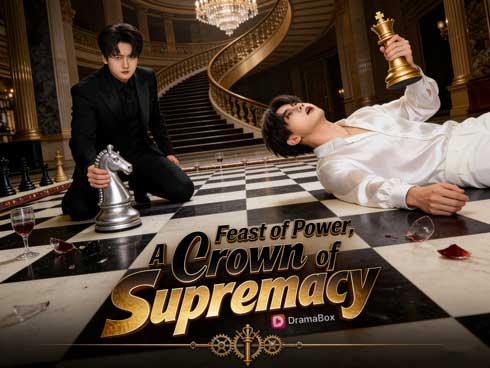
Open DramaBox to watch for free
📉A Homecoming That Becomes a War Zone
Bryan Clark’s journey begins in contradiction. Born into a powerful family but raised in the criminal underworld, he grows up learning one brutal truth early on: trust is a liability. When he is finally brought back to his so-called real home at twenty three, the welcome is anything but warm. His parents carry visible bias. His sister wears arrogance like armor. His adopted brother hides malice behind politeness.
Instead of begging for acceptance, Bryan studies them.
This is where the storytelling becomes particularly effective. The series frames Bryan as a former small potato in the family hierarchy, someone everyone believes can be ignored or controlled. That misjudgment becomes their greatest mistake. Each interaction is layered with quiet calculation, as Bryan begins his counterattack not with violence, but with psychological precision.
The narrative structure mirrors his ascent. Early episodes focus on humiliation and exclusion. Midway through, power dynamics shift as secrets surface and alliances fracture. By the time the story reaches its later stages, the family that once dismissed him is reacting rather than controlling.
The urban setting enhances this transformation. Boardrooms replace battlefields, contracts replace swords, and reputation becomes a currency more dangerous than money. This is an underdog rise told through modern power structures, making it feel both familiar and disturbingly plausible.
🏆Cast Spotlight | Faces Behind the Power Game
Zhan Zhuo as Bryan Clark
Born October 28, 2002, in Jiangxi, Zhan Zhuo is a mainland Chinese actor trained in drama and performance. His notable works include Stars Reunite Again Last Night, Sweeping the World in Ancient Times, Letters Too Hard to Send, and President Xiao’s Sweet Little Maid. His portrayal of Bryan anchors the series with quiet menace and controlled intensity.
Wang Yuqi as the Sister
Born May 5, 2004, from Yan’an, Shaanxi Province, Wang Yuqi stands at 170 cm and brings sharp presence to the role. Her representative works include This Small Matter Called the College Entrance Exam, The Whole Family Insulted Me, I Turned Around and Got Into Tsinghua, and Three Seconds. She delivers a performance that balances arrogance with vulnerability.
Together, the cast transforms A Feast of Power, A Crown of Supremacy Chinese Drama into a gripping study of ambition, identity, and the price of dominance in a world where blood ties mean nothing without power.
💎Power as a Love Language in a World Without Mercy
One of the boldest choices A Feast of Power, A Crown of Supremacy makes is framing power itself as Bryan Clark’s primary emotional outlet. He does not articulate trauma. He does not process pain through confession. Instead, he transforms every slight into leverage. For Western viewers, especially those drawn to darker antihero arcs, this approach feels refreshingly honest. Bryan is not pretending to be healed. He is simply effective.
Several standout moments underline this philosophy. In one particularly gripping sequence, Bryan is publicly undermined by a family member during a social gathering meant to reinforce unity. Rather than correcting the insult, he allows it to stand. Days later, the same person is quietly excluded from a lucrative deal, their authority evaporating overnight. No confrontation occurs. No explanation is offered. The message is clear. Disrespect carries consequences, whether acknowledged or not.
This brand of storytelling aligns closely with American tastes shaped by prestige television. The drama assumes its audience is intelligent enough to read between the lines. Power is communicated through access, silence, and exclusion rather than physical violence. Bryan’s ascent feels earned because it is rooted in systems that viewers recognize. Corporate loyalty, financial dependency, social perception. These are battlegrounds that feel real.
The emotional payoff lies not in reconciliation but in clarity. Bryan’s family is forced to confront an uncomfortable truth. Their cruelty did not harden him. It educated him. That realization lands with particular force in scenes where his parents attempt to reassert authority through moral language. Bryan listens, nods, and continues dismantling their influence. The show never suggests he is right. It simply shows that he is unstoppable.
For audiences tired of narratives that soften male protagonists to make them palatable, this unapologetic approach feels almost rebellious. Bryan Clark is not asking for approval. He is replacing the system that denied him worth. In doing so, the drama taps into a deeper fantasy about control in a world that often feels rigged.
🤵When the Golden Boy Walks Back In and Refuses to Beg
What makes A Feast of Power, A Crown of Supremacy immediately addictive to English-speaking audiences is how confidently it rejects the redemption fantasy. Bryan Clark does not return to his biological family seeking love, validation, or even revenge in the conventional sense. He comes back as a man who has already learned the rules of survival in places far crueler than polished living rooms and corporate dinners. For viewers raised on shows like Succession or Billions, this emotional temperature feels instantly familiar. Bryan understands that power is not given to those who deserve it but seized by those willing to endure moral discomfort.
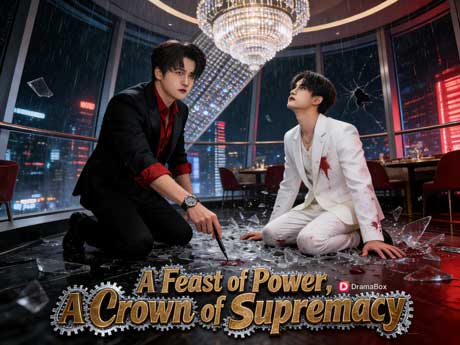
Open DramaBox to watch for free
The opening stretch of the drama is built around humiliation as spectacle. Bryan is judged for his clothes, his silence, his lack of pedigree. His sister’s disdain is casual and cruel, the kind that assumes superiority without needing to prove it. His parents speak in measured tones that mask disappointment, as though his existence is an inconvenience they have been forced to acknowledge. The adopted brother smiles too often, offering warmth that never reaches his eyes. To an American audience, this dynamic reads as a perfect storm of privilege and hypocrisy, the kind that begs for collapse.
What elevates the narrative is Bryan’s refusal to react in ways the family expects. He does not lash out. He does not plead. Instead, he observes. He memorizes weaknesses. He learns how guilt operates as a currency within this household. This restraint makes his eventual moves far more satisfying. The pleasure does not come from shouting matches but from quiet reversals, moments where authority shifts without announcement. One boardroom decision, one strategic partnership, one leaked truth, and suddenly the room feels colder.
The show’s pacing mirrors this philosophy. Each episode plants discomfort rather than delivering immediate payoff. For viewers accustomed to binge culture, this slow accumulation of dominance feels intentional. Bryan is not flipping the table. He is removing its legs one by one. By the time his family realizes they are no longer in control, the structure has already collapsed beneath them. This kind of narrative patience resonates deeply with audiences who appreciate psychological power plays over melodrama.
❓Why the Series Works: A Strong Male Lead Built on Moral Ambiguity
The greatest strength of A Feast of Power, A Crown of Supremacy Chinese Drama lies in its refusal to moralize its protagonist. Bryan Clark is not kind. He is not gentle. He is not always fair. What he is, however, is consistent. His philosophy is forged through neglect and sharpened by betrayal.
Zhan Zhuo’s performance captures this complexity with surprising restraint. His Bryan rarely raises his voice. His power is communicated through stillness, through eye contact, through the calm certainty that he will win eventually. This strong male lead archetype feels earned rather than exaggerated.
Supporting characters serve as mirrors rather than distractions. The sister, portrayed by Wang Yuqi, is not evil for the sake of drama. She represents entitlement born from unchecked privilege. Her confrontations with Bryan crackle with tension because both characters believe they are justified.
Visually, the series leans into clean, controlled compositions. Lighting often places Bryan slightly apart from others, reinforcing his emotional isolation. The pacing is sharp, making each Full Episode feel dense without becoming exhausting. For viewers watching the English Version with English Subtitles, the translation preserves the bite of the dialogue, allowing international audiences to fully appreciate the power plays.
As a Chinese Drama released on DramaBox, the show understands the platform’s audience. It balances binge-worthy momentum with enough narrative depth to encourage discussion across YTb clips and comment sections.
🤔Personal Take: A Cold, Satisfying Power Fantasy
This is not a drama for viewers seeking warmth or reconciliation. It is a story designed for those who find catharsis in watching systems collapse under their own hypocrisy. The pleasure of A Feast of Power, A Crown of Supremacy Chinese Drama lies in its inevitability. You know Bryan will win. The question is how far he will go, and whether the cost matters to him at all.
Some may argue that the series leans too heavily into ruthless fantasy. Yet that is precisely its appeal. It commits fully to its premise. There are no sudden moral awakenings, no convenient forgiveness arcs. What you see is what you get.
As a Free Movie style short drama with Exclusive copyright and a First release on the entire network, it exemplifies how compact storytelling can still feel expansive when character motivation is clear.
🔒Final Thoughts: A Crown Forged in Cruelty Still Shines
By the end, A Feast of Power, A Crown of Supremacy Chinese Drama leaves viewers with an uncomfortable sense of satisfaction. Bryan Clark does not just reclaim his place. He redefines what that place means. Power, once denied to him, becomes his only language.
This is a story about choosing strength over belonging, strategy over sentiment, and supremacy over approval. Whether you see Bryan as a hero or a villain says more about the viewer than the narrative itself.
In the ever-growing landscape of urban revenge dramas, this series earns its place not by reinventing the genre, but by executing it with precision, confidence, and unapologetic clarity.