




When He Lifts the Hammer Chinese Drama Full Movie + Cast: Steel, Silence, and a Hidden Legend
When He Lifts the Hammer Chinese Drama Full Movie + Cast: Steel, Silence, and a Hidden Legend
Concealed Identity DramaBox
 2025-12-29
 248
248🔨🧱 When Silence Shatters Steel: Why When He Lifts the Hammer Chinese Drama Redefines the Hidden Master Trope
🏹The Weight of a Raised Hammer: An Unlikely Hero Steps Forward
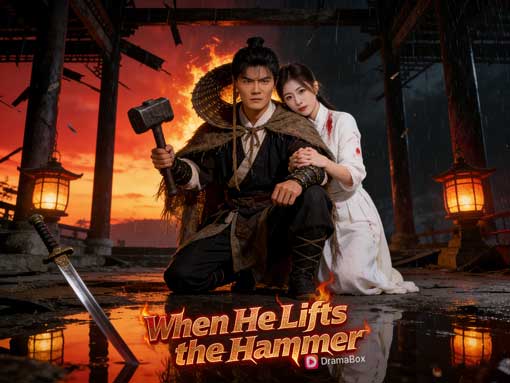
There is something irresistibly satisfying about watching a man who has been underestimated for too long finally stand upright. When He Lifts the Hammer Chinese Drama builds its entire emotional engine on that moment. Before the hammer rises, before sparks fly, before the truth is spoken, the story asks the viewer to sit with silence.
Lan Gould was once known across the realm as the God of Blades, a name that carried both reverence and fear. Now he exists on the margins, dismissed as an incompetent son-in-law within Highblade Manor. He eats last, speaks little, and endures quiet humiliation. This deliberate contrast between past glory and present invisibility gives the series its emotional texture. Rather than rushing toward revelation, the drama lingers in restraint.
This approach makes the series stand out within the current Chinese Drama landscape. Many short dramas favor immediate dominance and quick gratification. Here, patience becomes part of the narrative reward. When Lan finally chooses to act, the impact lands harder because the audience has felt the weight of every insult he swallowed.
For viewers discovering the series through DramaBox, the opening episodes establish a tone that blends legend with domestic tension, setting up a story that feels intimate even as it gestures toward myth.
Open DramaBox to watch for free
🔥Fire, Iron, and Truth: A Story Forged Through Conflict
The central conflict ignites when Lori Kurtz, a high ranking figure from Artisan Hall, arrives to seize Highblade Manor’s most valuable mine. This is not simply a land dispute. It is a symbolic struggle between institutional power and personal legacy. Highblade Manor, cornered and desperate, proposes a forging duel as a final gamble.
The duel is where the series fully commits to its concept. Forging becomes combat. Technique replaces brute force. Every strike of the hammer carries narrative meaning. Lan’s movements reveal years of mastery hidden beneath humility. Without long speeches or dramatic monologues, the truth emerges through action.
This is a classic concealed identity narrative, but it is executed with care. The reveal does not come from arrogance but necessity. Lan steps forward not to reclaim status, but to protect what little peace he has built. In that choice, the story reframes heroism as responsibility rather than dominance.
The ancient setting allows the drama to lean into martial arts chivalry while avoiding excessive fantasy. The forging duel feels grounded, tactile, and tense. Sparks fly not as spectacle, but as punctuation.
Scattered throughout the episodes are moments of counterattack that feel earned rather than forced. Each reversal is rooted in skill, patience, and restraint. This pacing keeps the audience engaged across each Full Episode, especially for viewers watching the English Version with English Subtitles, where clarity of action matters.
🤵Cast Introduction | Bringing the Forge to Life
Wei Kai as Lan Gould (魏凯)
Mainland Chinese actor born June 7, 1987, in Daqing, Heilongjiang. Graduate of Dalian Nationalities University Art College. Representative works include Changfeng Tange, The White Haired Witch of Lunar Kingdom, and Love Will Tear Us Apart.
Tian Tingting as Lori Kurtz (田婷婷)
Mainland Chinese actress born January 23, 2003, in Anhui. Graduate of Shanghai Theatre Academy. Known for My Wife Is Not Quite Right, God of Blades, and Rebirth of the Golden Age.
Yang Gengtai (杨更太)
Mainland Chinese Hui ethnicity actor from Zhengzhou, Henan. Studied at the National Academy of Chinese Theatre Arts. Appeared in Class Monitor’s Breakfast Milk, My Sister’s Shining Life, The Most Beautiful Stranger, and Misplaced Defense.
Wei Renyue (卫仁越)
Mainland Chinese actor born in 1995, height 187 cm. Representative works include Fallen Leaves Never Return, When Love Has Become the Past, and After Regret, I Rise as King with My Daughter.
🥊Why the Blade Cuts Deeper: Craft, Character, and Visual Language
One of the greatest strengths of When He Lifts the Hammer Chinese Drama lies in its character work. Wei Kai’s portrayal of Lan Gould avoids exaggeration. His performance is built on stillness, measured eye movement, and controlled physicality. When he finally reveals his true mastery, the shift feels organic, not theatrical.
Tian Tingting’s Lori Kurtz is more than an antagonist. She represents the cold authority of institutions that value results over people. Her confidence and precision make her a worthy opponent, not a caricature. Their confrontation feels like a clash of philosophies rather than good versus evil.
Supporting characters add texture rather than distraction. Yang Gengtai and Wei Renyue provide different reflections of ambition and regret within the same world. Their presence reinforces the idea that power reshapes everyone it touches.
Visually, the series favors close framing and grounded choreography. The forge scenes glow with warm light, contrasting sharply with the colder spaces of authority. This visual contrast subtly reinforces the emotional divide between creation and control.
For audiences searching for a Free Movie style experience with substance, the series offers a focused narrative that respects its runtime. As a First release on the entire network with Exclusive copyright protection, it signals DramaBox’s confidence in more craft driven storytelling.
🤐The Power of Silence Before the Storm
One of the most gripping elements in When He Lifts the Hammer is how patiently it lets humiliation breathe before unleashing power. For American audiences who love the slow burn of an underestimated hero, Ian Gould’s early presence feels almost uncomfortable in the best way. He is not loudly mocked, nor theatrically abused. Instead, the contempt comes in small, cutting gestures. A dismissive glance from his in laws. A conversation that pauses when he enters the room. Decisions made about his life as if he is furniture. This restraint mirrors a familiar Western storytelling instinct seen in sports underdog films or blue collar legends, where dignity is stripped quietly long before it is reclaimed loudly.
Ian’s role as an overlooked son in law works precisely because it taps into a universal anxiety. He is capable, disciplined, and deeply loyal, yet reduced to economic worth alone. When the Highblade Manor mine becomes the center of conflict, the audience already understands what is at stake emotionally, not just financially. The mine is not merely property. It represents legacy, survival, and the last thread tying Ian to a family that never truly accepted him. American viewers respond strongly to this kind of symbolic pressure, especially when it involves craftsmanship, land, or inherited responsibility.
Open DramaBox to watch for free
The arrival of Lori Kurtz, backed by the intimidating authority of Artisan Hall, sharpens the tension without rushing it. Her confidence is not cartoonish. It is procedural, bureaucratic, and cold, which makes her threat feel real rather than melodramatic. She does not need to shout because the system already favors her. This is where the show cleverly aligns ancient world storytelling with modern power dynamics. For English speaking viewers used to corporate thrillers and legal dramas, the parallels are immediate. Authority does not always roar. Sometimes it simply shows up with paperwork and an army of rules.
What makes this phase compelling is Ian’s refusal to explain himself. He does not protest. He does not reveal his past. He does not even ask for trust. His silence becomes an act of resistance, and the audience senses that every insult absorbed is being forged into something sharper. By the time the forging duel is proposed, it feels inevitable. Not because Ian seeks revenge, but because the world has left him no other language to speak.
🏯The Forge as a Battlefield and the Birth of Awe
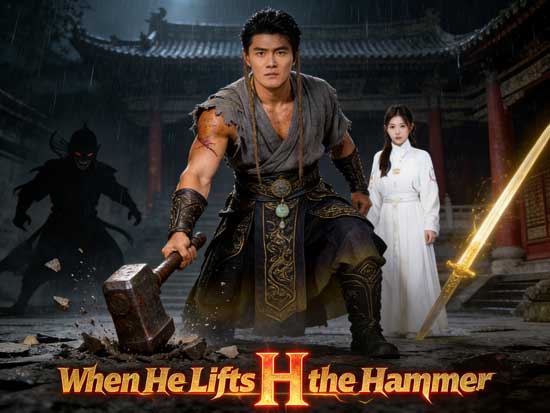
The forging duel sequence in When He Lifts the Hammer is where the series truly announces itself to global audiences. This is not just a contest of skill. It is a cinematic redefinition of combat. Instead of swords clashing or fists flying, the battle unfolds through heat, rhythm, and precision. For American viewers accustomed to high stakes competition shows and sports dramas, the duel reads instantly as a championship match disguised as craftsmanship.
What elevates the scene is its pacing. The show does not rush the process. The camera lingers on molten metal, on Ian’s steady breathing, on the exact moment when others realize something is wrong. His movements are not flashy. They are economical, almost meditative. This contrast creates a powerful visual language. Where others perform, Ian executes. Where others rely on reputation, he relies on muscle memory and mastery earned through pain and time.
The audience experiences the shift in power before the characters do. There is a subtle turning point when spectators stop whispering and start watching. Lori Kurtz’s confidence fractures not through dialogue, but through observation. She sees techniques she recognizes yet cannot replicate. This is a deeply satisfying moment for viewers who enjoy dominance revealed through competence rather than exposition. It echoes beloved Western archetypes of the retired champion forced back into the ring, not to prove arrogance, but to defend something sacred.
The sound design deserves special mention. Each hammer strike lands with weight, reinforcing the idea that every blow carries history. This is not merely metal being shaped. It is identity reclaiming form. By the time Ian unveils the final blade, the room’s silence is louder than any applause. Even those who despised him are forced into reverence, not because he demands it, but because mastery demands acknowledgment.
For English speaking audiences, this scene works because it transcends cultural specificity. Craftsmanship as honor, silence as strength, and skill as truth are universal storytelling currencies. The forging duel does not need translation. It communicates through effort, sweat, and inevitability. In that moment, Ian Gould stops being invisible, and the world finally realizes that legends do not announce themselves. They wait until the strike cannot be ignored.
🏺Identity Unmasked and the Cost of Being Legendary
After the hammer falls and the truth surfaces, When He Lifts the Hammer shifts into its most emotionally complex territory. Victory does not resolve everything. Instead, it complicates relationships and forces characters to confront the consequences of their assumptions. For American audiences who appreciate character driven aftermath rather than instant celebration, this is where the drama deepens.
Ian’s revealed identity as the God of Blades does not immediately restore familial harmony. Instead, it exposes guilt, fear, and regret. Those who dismissed him now scramble to redefine themselves in his presence. This power imbalance reversal is uncomfortable and intentional. The show resists the fantasy of instant forgiveness, opting instead for emotional realism. Respect earned through fear is not the same as love earned through understanding, and Ian knows this.
Lori Kurtz’s arc also gains nuance in defeat. She is not reduced to a one dimensional villain. Her ambition, shaped by institutional loyalty and personal pride, collapses under the weight of truth. For viewers used to morally layered antagonists, her response feels grounded. She does not scream injustice. She recalculates. This choice reinforces the show’s broader theme that power structures adapt, but legends disrupt.
The final movements of the story emphasize responsibility over revenge. Ian does not seek to dominate for domination’s sake. His reclamation of status is framed as a burden rather than a trophy. This resonates strongly with Western audiences who admire heroes reluctant to wield power, yet willing to stand when others cannot. The concept of martial arts chivalry is woven subtly into his choices, aligning ancient ideals with modern expectations of ethical leadership.
By the end, When He Lifts the Hammer offers something rare in short form drama. It delivers spectacle without sacrificing restraint, triumph without hollow celebration, and legend without arrogance. Ian Gould’s journey reminds viewers that true strength often looks like patience, and the most dangerous person in the room is usually the one who never needed to prove it until now.
👑Personal Verdict: A Quiet Legend That Earns Its Impact
What makes When He Lifts the Hammer Chinese Drama resonate is its refusal to shout. It trusts the audience to notice restraint, to feel tension without constant escalation. Some viewers may wish for faster payoffs or louder confrontations, but the series thrives precisely because it resists those impulses.
The emotional payoff arrives not when Lan defeats his opponent, but when he stands without apology. The legend reemerges, not as a tyrant, but as a craftsman who understands the weight of every strike.
For fans of legend driven narratives, ancient settings, and identity reveals rooted in skill rather than brute force, this series is an easy recommendation. It may not reinvent the genre, but it refines it with confidence.
🤔Final Reflections: When the Hammer Falls, Silence Ends
By the final episodes, it becomes clear that When He Lifts the Hammer Chinese Drama is not about reclaiming fame. It is about choosing when silence becomes complicity. Lan Gould’s journey reminds us that mastery carries responsibility, and that sometimes the strongest statement is made without words.
As the hammer rises and falls, so does the illusion that humility equals weakness. The series leaves viewers with a simple but powerful truth: legends do not disappear. They wait.