




You Were My Only, Once Chinese Drama Full Movie: When Love Gives Everything and Receives Silence [Urban Counterattack]
Urban DramaBox
 2026-01-05
 720
720Click here to travel through Aiden York's life in [You Were My Only, Once] 👈
Introduction: Loving Quietly in a World That Rewards Noise
There are love stories built on fireworks and fate. Then there are the quieter ones that most people recognize instantly, the kind shaped by endurance, compromise, and the belief that giving more will somehow be enough. You Were My Only, Once Chinese Drama belongs firmly to the second category, and that is exactly why it lingers long after the screen fades to black.
This DramaBox short drama does not chase spectacle. It chooses something far riskier: emotional truth. Set in a recognizably urban environment where ambition often speaks louder than affection, the series explores what happens when one person builds their entire world around another, only to discover they were never truly invited inside. For viewers who have ever waited, hoped, or stayed too long, this story does not need exaggeration. It already knows where it hurts.
Rather than presenting love as destiny, the drama frames it as labor. Long hours. Missed chances. Silent sacrifices. The result is a narrative that feels deeply personal, even uncomfortable at times, yet impossible to look away from. This is not a fantasy of reunion. It is a meditation on timing, imbalance, and the quiet dignity of walking away.
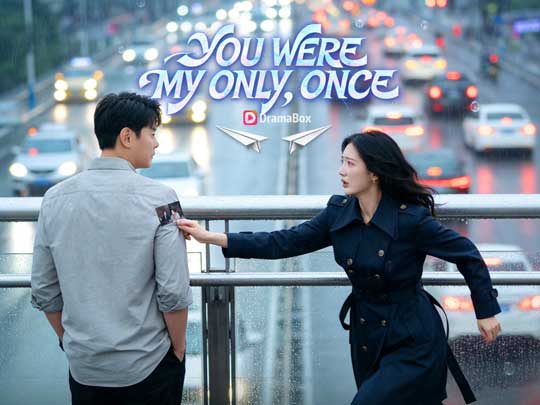
![You Were My Only, Once Chinese Drama Full Movie: When Love Gives Everything and Receives Silence [Urban Counterattack]](https://nres.webfic.com/res/seoArticleHtml-bIJLLhR6MH.jpg "You Were My Only, Once Chinese Drama Full Movie: When Love Gives Everything and Receives Silence [Urban Counterattack]")
Open DramaBox to watch for free
Main Cast
Qiu Haoxuan (邱浩轩) as Aiden York
A Scorpio-born actor known for his calm intensity, Qiu brings depth and restraint to Aiden’s role. His previous works include Rise of the Dragon, I Am an Entertainment Tycoon, and My Famous CEO Wife, showcasing his range across modern emotional dramas.
Jin Xinxin (金鑫欣) as Xena Boyd
With a background in contemporary urban stories, Jin portrays Xena with layered ambition and vulnerability. Her notable works include Spring Festival Comeback Showdown and The Moon Still Owes My Life, highlighting her ability to convey emotional distance and internal conflict.
Story Overview: Ten Years of Devotion and One Moment of Letting Go
Aiden York is not extraordinary in status or wealth. He is, by his own admission, a small potato in a urban city that measures worth through titles and connections. Yet his love for Xena Boyd is anything but small. For ten years, he supports her academic dreams, juggling multiple jobs so she can focus on research, publications, and the climb toward becoming Baymere’s youngest professor.
The drama never rushes this history. Instead, it allows the weight of time to settle in. We see Aiden exhausted but hopeful, proud but invisible. Xena, meanwhile, is not portrayed as cruel. She is ambitious, focused, and emotionally distant, convinced that love can wait while success cannot. This imbalance becomes the emotional core of You Were My Only, Once Chinese Drama.
The turning point arrives not through betrayal, but realization. When the dean’s son enters Xena’s life, offering a future aligned with her ambitions, Aiden understands something painful and liberating at once. He steps aside. He returns home. He chooses himself for the first time.
Only then does Xena begin to feel the absence she never noticed before. The drama resists easy redemption. There is no dramatic chase scene, no grand confession that erases the past. Instead, regret unfolds slowly, like a truth that arrives too late to change anything.
The Man Who Loved Without Being Chosen
What makes You Were My Only, Once quietly devastating is not the betrayal, because there is no dramatic cheating scandal or explosive confrontation. The real wound comes from something far more familiar to modern audiences: being present for someone every day and still being optional. This is a story that understands how love can be invisible when it is consistent, and how easy it is to overlook devotion when it never demands attention.
Aiden York is not written as a tragic hero in the traditional sense. He does not deliver long speeches about sacrifice, nor does he position himself as a victim. Instead, the drama allows his actions to speak in a language many viewers recognize immediately. Long hours. Multiple jobs. Quiet rides home at night. Skipped meals. Deferred dreams. His love is not loud, and that is exactly why it becomes background noise in Xena Boyd’s increasingly ambitious life.
For American and Western audiences, this portrayal hits especially close to home. It mirrors the reality of relationships shaped by hustle culture, academic pressure, and the belief that success must come first because love will wait. Xena’s rise as Baymere’s youngest professor is framed as impressive, not villainous. Her emotional distance is not cruelty, but tunnel vision. The drama understands that neglect often comes from focus, not malice.
What elevates this arc is how the camera aligns us with Aiden’s perspective without romanticizing self erasure. We see him proud of Xena. We see him exhausted. We see him rationalize her indifference as temporary. This is not blind love, but hopeful love, which is far more dangerous. Hope convinces him that timing will eventually correct imbalance. The drama patiently dismantles that illusion.
The moment Aiden steps aside for the dean’s son is not explosive. It is almost gentle. And that gentleness is what makes it heartbreaking. He does not fight because he finally understands that love should not require constant proof of worth. His decision to return home is not framed as defeat, but as self preservation. For viewers accustomed to dramatic revenge arcs, this quiet exit feels radical.
This section of the story resonates deeply with audiences who have experienced one sided emotional labor. It speaks to anyone who has been the supportive partner, the reliable presence, the safe option who was never truly chosen. You Were My Only, Once captures that experience with restraint and respect, allowing the pain to feel earned rather than manipulated.
A Love Story Without Reunion, and Why That Matters
Perhaps the boldest choice You Were My Only, Once makes is its refusal to comfort the audience with a neat emotional resolution. For many viewers, especially those accustomed to Western romantic storytelling that rewards perseverance with reunion, this can feel unsettling. Yet it is precisely this choice that gives the drama its lasting impact.
The series understands that not all love stories end with togetherness. Some end with understanding. Others end with growth that happens separately. Aiden’s return home marks a turning point that is not about success, but about reclaiming self worth. The drama does not rush to show him thriving in flashy ways. Instead, it allows his healing to remain understated.
Open DramaBox to watch for free
This restraint aligns well with modern English-speaking audiences who increasingly appreciate narratives about emotional boundaries. Aiden’s decision to let go is framed as strength, not loss. He does not need to outperform his past or prove anything to Xena. His arc closes quietly, suggesting that peace is sometimes the most meaningful victory.
From a cultural perspective, this ending challenges the fantasy that love should always endure sacrifice. It asks a harder question: when does endurance become self abandonment? By refusing to reward prolonged suffering with reunion, the drama validates the choice to walk away from unbalanced love.
The absence of a traditional counterattack or dramatic comeback reinforces this message. There is no moment where Xena watches Aiden succeed and realizes what she lost in cinematic fashion. Instead, the drama leaves that realization internal, unresolved, and deeply human. This choice may frustrate some viewers, but it also elevates the story beyond escapism.
For American and global audiences who value emotional realism, this ending feels honest. It reflects the reality that not all relationships are meant to be repaired, and that growth often happens after the story ends. You Were My Only, Once becomes less about romance and more about emotional maturity.
In a genre crowded with exaggerated reconciliation arcs, this drama stands out by honoring the quiet dignity of closure without reunion. It trusts its audience to accept that sometimes, love ends not because it failed, but because it taught everything it could.
Why This Drama Resonates: Emotional Restraint and Honest Pain
What sets You Were My Only, Once Chinese Drama apart from many romance-driven Chinese Drama titles is its refusal to soften disappointment. The series does not frame sacrifice as noble when it goes unseen. Nor does it punish ambition outright. Instead, it asks viewers to sit with the consequences of emotional neglect.
The pacing is deliberate, allowing moments of silence to carry as much weight as dialogue. Camera work often lingers on Aiden’s expressions after conversations end, emphasizing what remains unsaid. This choice enhances the sense of bitter love that defines the story. The audience is not told how to feel. They are invited to recognize the feeling themselves.
Xena’s arc is particularly compelling because it avoids villainization. Her realization is not framed as punishment, but awakening. By the time she understands what she has lost, the drama makes it clear that love cannot be reclaimed simply because it is finally acknowledged. That emotional honesty is rare, especially in short-form storytelling designed for quick consumption.
For viewers watching the English Version with English Subtitles, the emotional clarity translates seamlessly. The themes of disappointment and regret are universal, cutting across language and culture. It is easy to see why this title performs strongly on DramaBox as a Free Movie option for audiences seeking something more grounded than typical romance fantasies.
Personal Evaluation: Not a Comfort Watch, But a Necessary One
This is not a drama designed to make viewers feel triumphant. It is designed to make them feel seen. You Were My Only, Once Chinese Drama succeeds because it respects the intelligence and emotional maturity of its audience.
Some viewers may find the lack of a traditional happy ending frustrating. Others may wish for a stronger counterattack arc where Aiden’s success visibly outshines his past. Yet the restraint is the point. The drama understands that closure does not always come with applause. Sometimes it comes with acceptance.
The performances carry much of this weight. Aiden’s quiet endurance feels authentic rather than exaggerated. Xena’s delayed realization avoids melodrama, making her regret feel painfully real. Together, they create a dynamic that feels less like fiction and more like memory.
For those browsing YTb clips or searching for a Full Episode experience that prioritizes emotional depth over spectacle, this series offers a different kind of satisfaction. It may not leave you smiling, but it will leave you thinking.
Conclusion: When Letting Go Becomes the Bravest Choice
At its core, You Were My Only, Once Chinese Drama is a story about choosing self-respect over hope. It challenges the romantic myth that persistence always wins, offering instead a quieter truth: sometimes love ends not because it was weak, but because it was one-sided.
In a media landscape crowded with instant gratification and exaggerated twists, this DramaBox release stands out through its sincerity. It reminds viewers that love, like time, only moves forward. And once something precious is taken for granted, it may never return.
For anyone who has ever loved deeply without being fully loved back, this drama does not offer comfort. It offers understanding. And sometimes, that is far more powerful.