




When the Throne Betrays Its Blade: The Sword Protects the Throne, But the Throne Loses the Sword. A Tragic and Loyal Conclusion
Romance DramaBox
 2026-02-02
 467
467When the Throne Betrays Its Blade: The Sword Protects the Throne, But the Throne Loses the Sword. A Tragic and Loyal Conclusion
Introduction: Swords forge loyalty, thrones conceal evil. The tragic beginning provokes deep reflection
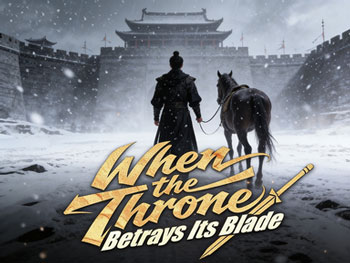
In the arena of power politics and the tragedy of loyalty, "When the Throne Betrays Its Blade" precisely hits the emotional chord of the audience with its setting of "a non-royal prince devoting all his efforts to the war but being betrayed by the royal power and losing all his achievements". It depicts the cruelty beneath the royal power and the struggle of human nature. Lucas Steele, a prince not of royal blood, is filled with sincerity and responsibility. He leads his army to march northward, only to reclaim the occupied territory and restore peace at home. After five years of battles, with mountains of corpses and blood, countless soldiers died on the battlefield. When victory was within reach and the imperial capital was within reach, Queen Simone Erwin issued one after another, a total of eighteen imperial edicts, forcing the army to retreat. Five years of sacrifices were in vain, and what awaited Lucas was not praise but accusations in the court, public humiliation, and the deprivation of his title, and even witnessing the recovered land being returned to the enemy with his own eyes.
Open DramaBox to watch for free
Plot Summary: Five years of battles ended in vain, the throne betrayed and loyalty shattered.
Lucas Steele, though not of pure royal blood, possessed extraordinary bravery and loyalty. He was deeply aware of the pain of the country's fall and voluntarily offered to lead the army northward to fight against the enemy. He vowed to recover the lost territory and protect the people. At that time, the northern battlefield was surrounded by powerful enemies and the conditions were harsh. Every battle involved brutal sacrifices. Lucas and his soldiers shared joys and hardships together, fought bravely, and gradually regained the occupied land. After five years of hardship, they finally reached the capital city.
The entire army was in high spirits, and the soldiers were eager to return home victorious and to console their fallen comrades. Lucas also firmly believed that the five years of efforts would eventually lead to peace and stability at home. But at this crucial turning point, eighteen imperial edicts for retreat were issued by Queen Simone one after another. The military orders were as firm as mountains. Even though he was deeply reluctant, Lucas could only be forced to order a retreat. The fruits of the five-year campaign were wiped out overnight.
Lucas, who had returned in a state of humiliation after the defeat, was immediately drawn into the political turmoil. On the throne, some people had already been secretly plotting. Queen Simone, oblivious to this, tacitly approved the public humiliation of Lucas. Eventually, Lucas was stripped of all his titles and reduced to an ordinary citizen. What made him even more desperate was that he witnessed with his own eyes the land he and his soldiers had fought to regain with their blood being voluntarily returned to the enemy by the court. Loyalty was trampled upon, sacrifices were ignored, and in despair, Lucas chose to turn around and leave, distancing himself from this cold throne and the heartless throne.
Highlights: A sense of tragedy is fully conveyed, the political maneuvering is intricate, and the camera work is extremely powerful.
1. Plot setup: Extreme contrast + political intrigue subplots, with high tension and profound depth.
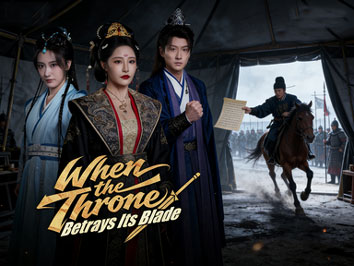
The most core highlight of the series lies in the "extreme contrast between loyalty and betrayal". Through the intense passion and sacrifice of five years of warfare, it contrasts with the indifference and calculation of the imperial power, creating a powerful sense of tragedy and solemnity. The groundwork of "five years of warfare" meticulously depicts the brutality of the war and the soldiers' perseverance, making Lucas's loyalty and responsibility more three-dimensional, and making the subsequent betrayal even more impactful - the more passionate and loyal one is, the more it highlights the cruelty of the throne's betrayal, and the more it makes the audience empathize with Lucas's despair and unwillingness to give up.
Open DramaBox to watch for free
2. Climax of the plot: Publicly humiliating the loyal one, then turning away to show a sense of desolation.
The climax of the entire play is concentrated in the scene where "Lucas is publicly humiliated, deprived of his title, and witnesses his country being returned to the enemy". This scene reaches the peak of emotional outburst and a sense of tragedy. In the palace, the accuser speaks sharply and presses on relentlessly, shifting all the blame for the withdrawal of troops onto Lucas, openly defaming his loyalty. While Queen Simone sits on the throne, she remains indifferent and watches calmly, saying not a word of defense or showing the slightest pity. She tacitly accepts all of this with a cold acquiescence.
From the initial fierce argument to the later complete despondency, all the passion and sincerity in Lucas's heart were completely crushed at this moment. When the title of nobility was taken away and his dignity was completely trampled upon, Lucas did not resist or shout with resentment. He merely turned calmly, stepped one step at a time out of the palace, and moved away from this power center that broke his heart. His departure was not a compromise, but a complete and resolute rejection of the imperial power, a helpless exit after the betrayal of loyalty. The camera froze on his lonely back figure, and an endless sense of sorrow and melancholy rushed towards him, hitting his heart directly.
3. Cinematographic Language: Light and shadow convey the solemnity, while details capture the loyalty and despair.
The cinematographic language of the series precisely matches the solemn and profound tone, using color tones and camera movements to convey the mood changes of the characters and the weightiness of the plot. When depicting the northern battlefield, cold tones of light and shadow are frequently used, combined with vast battle scenes and close-ups of soldiers' sacrifices, highlighting the brutality of the war and Lucas's determination. Every shot exudes passion and solemnity. When shooting the palace scenes, the light becomes increasingly cold and oppressive, with the throne towering high and the light focused on the queen, highlighting the majesty and coldness of the imperial power. And Lucas's position is always in the shadow, suggesting his passivity and the fate of being eventually abandoned.
Acting & Characters: The characters are three-dimensional and have depth, with the acting skills portraying both solemnity and coldness.
1. Lucas Steele (the male lead): From passionate loyalty to a despondent tragic hero
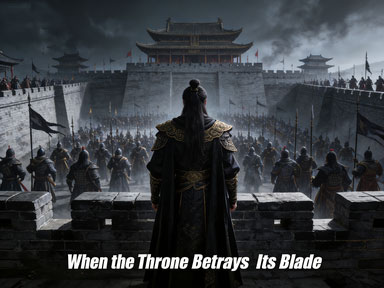
Lucas is a core character with a deeply tragic nature. The actor skillfully portrays his complete emotional arc of "passionate and resolute - unwilling to endure - desperate and lonely" through his superb acting skills. When he played the role of the prince fighting on the battlefield in the early part of the film, his eyes were sharp, his posture upright, and every gesture exuded the bravery and responsibility of a warrior. His tenderness when interacting with the soldiers, his ruthlessness when facing the enemy, perfectly conveyed the image of a passionate and loyal soldier. When receiving the order to retreat, the resentment and resignation in his eyes fully demonstrated the contradiction between "the military order is like a mountain" and "not willing to give up". When he turned and left at the end, there was no intense emotion, only calm and desolation, which further highlighted the tragic nature of the character, making people feel extremely heart-wrenching.
Open DramaBox to watch for free
2. Simone Erwin (Queen): A cold and calculating person, the symbol of the throne.
Simone is a highly complex villainous character. The actress skillfully portrayed her traits of "surface authority - inner coldness - shrewd calculation". She did not portray her as merely evil but highlighted the alienation of human nature caused by the monarchy. When playing the role of the empress, her eyes were cold and her demeanor was dignified. When sitting on the throne, she exuded a detached yet authoritative aura. Even in the face of Lucas's defense and the sacrifices of the soldiers, she remained calm, without a single ripple. She issued eighteen imperial edicts and tacitly approved the framing of Lucas, not out of impulse, but out of the calculation of the monarchy - perhaps out of fear of Lucas's military power and prestige, or to balance the power within the court. She displayed the coldness and selfishness of the monarchy to the fullest extent.
3. Key Supporting Role: Highlights the conflict, emphasizes the power play and the tragic elements
The supporting characters in the play are well-portrayed, not only advancing the plot but also highlighting the cruelty of power politics and the tragic nature of the story. The trusted generals around Lucas remained steadfastly by his side; the schemers in the court were greedy and cunning, willing to frame loyalists for power, becoming pawns in the imperial power struggle and the final straw that broke Lucas; while the close advisors around the empress were well-versed in the ways of the emperor, silently driving everything forward, highlighting the coldness of the court and the ubiquity of power politics. These supporting characters each fulfilled their own roles, enriching the plot layers, making the imperial power struggle more realistic, and making Lucas's tragic image more three-dimensional.
Personal Opinion: The story is emotionally powerful and profound, touching the heart. It combines elements of political intrigue and human nature.
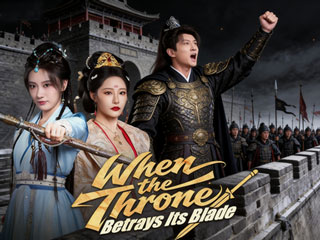
What moves me most in "When the Throne Betrays Its Blade" is that it doesn't deliberately depict a heroic comeback. Instead, it confronts the cruelty of the monarchy and the fragility of loyalty, using the most profound language to tell a tragic story of loyalty. Lucas's tragedy is not an individual failure, but the inevitable outcome of the confrontation between loyalty and power politics - in the face of absolute monarchy, the sincerity and responsibility of an individual ultimately cannot withstand the scheming of the emperor and the intrigues of the court. This sense of helplessness is more saddening than any tragedy.
Open DramaBox to watch for free
Final Verdict: The sword betrays loyalty, the throne shows no mercy, and the sorrowful song concludes the coldness of power politics
"When the Throne Betrays Its Blade" centers around the theme of "loyalty betrayed by the monarchy". With a profound tone, detailed portrayal of power politics, three-dimensional character development, and an extreme sense of tragedy, it stands out among similar power drama series. It does not deliberately cater to the sense of excitement, but instead uses the most realistic cruelty to showcase the struggle of human nature and the fragility of loyalty under the rule of the monarchy. It not only makes the audience empathize with Lucas' sadness and unwillingness, but also triggers deep thoughts about power and loyalty, conveying the bleak core of "the monarchy has no warmth and loyalty cannot be fully maintained", being profound and thought-provoking.
If you enjoy themes of heroic struggle, historical warfare or tragic heroes, this drama is definitely worth watching. The passionate battles over five years, the cruel betrayal of the throne, and the desolation of the hero's end - every scene touches the heart, and every struggle moves people deeply.