




Your Highness, Please Leave Me Alone Chinese Drama | Love, Power, and a Prince Who Will Not Let Go
Second-chance Love DramaBox
 2026-02-10
 393
393Introduction: When Royal Pride Meets Female Independence
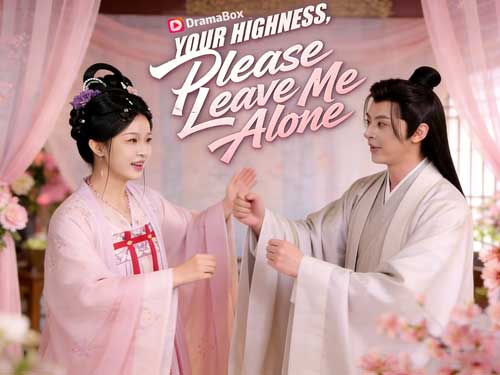
If you have ever laughed at a romance where the man is far more emotionally invested than the woman, Your Highness, Please Leave Me Alone might feel like it was written just for you. This DramaBox short drama flips the traditional historical romance dynamic on its head. Instead of a cold prince chasing power and a heroine waiting patiently, we get a fiercely independent noblewoman and a prince who is entirely unbothered by dignity when it comes to love.
At its heart, this series is playful, self aware, and surprisingly modern in spirit despite its historical setting. It explores what happens when a woman chooses autonomy over romance and when a man of royalty willingly sheds his pride to win her back. The result is a story that balances sweetness with strategy, comedy with sincerity, and romance with personal growth. From the very first episode, it is clear that Your Highness, Please Leave Me Alone Chinese Drama is not about conquest, but about persistence, consent, and emotional accountability.
For viewers who enjoy historical romance with a strong female lead and a male protagonist who learns to follow rather than command, this drama feels refreshing. It knows its tropes and then plays with them, often winking at the audience while doing so.
Open DramaBox to watch for free
Storytelling with a Twist: Pregnancy, Princes, and Relentless Pursuit
Juliet Lovell is not a passive heroine waiting to be rescued. As the heiress of a noble family, she understands both privilege and responsibility. When she discovers she is pregnant, she makes a decision that defines the entire story: she will keep the child and cut ties with the father. In another drama, this choice would lead to endless suffering. Here, it becomes the starting point of Juliet’s independence.
The twist arrives quickly and dramatically. The child’s father is not just anyone, but the seventh prince, Elijah Rowley, and to make matters even more complicated, he is also her official fiancé. Rather than asserting his authority as royalty, Elijah chooses a far more unexpected path. He adopts a hidden identity and engineers a series of seemingly accidental encounters, all designed to remain close to Juliet and slowly win back her trust.
This premise fuels the charm of Your Highness, Please Leave Me Alone Chinese Drama. The prince’s pursuit is shameless, affectionate, and often comedic. He appears wherever Juliet goes, offering help she does not ask for and affection she insists she does not need. Yet beneath the humor lies a sincere exploration of destined love and second chances. Elijah is not trying to trap Juliet. He is trying to prove that love does not have to conflict with her desire for independence.
The narrative structure is perfectly suited to the short drama format. Each Full Episode moves briskly, ending with a moment that encourages just one more click. Released on DramaBox as a Free Movie style series with English Subtitles and an English Version available, the show quickly found an international audience. Its First release on the entire network and Exclusive copyright status helped it stand out among fans searching for lighthearted yet emotionally grounded Chinese dramas.
Rather than focusing on palace intrigue or heavy political struggles, the series centers on emotional negotiation. Juliet’s resistance and Elijah’s persistence create a rhythm that keeps the story engaging without becoming exhausting. Their relationship evolves through dialogue, shared experiences, and gradual trust rather than dramatic declarations.
When the Prince Becomes the Joke: Romantic Comedy Energy in a Historical World
One of the most unexpectedly delightful aspects of Your Highness, Please Leave Me Alone Chinese Drama is how confidently it leans into romantic comedy, even within a historical setting that usually takes itself very seriously. For many English speaking viewers, especially those raised on rom coms where banter and timing matter more than power and hierarchy, this drama feels instantly familiar in spirit. It understands that comedy is not about making characters foolish, but about allowing them to be human.
Elijah Rowley, the seventh prince, is the clearest example of this tonal confidence. In most historical romances, a prince’s dignity is sacred. Here, it becomes negotiable. Elijah repeatedly chooses emotional proximity over royal distance, and the show frames this choice not as weakness, but as sincerity. Watching a royal figure willingly orchestrate awkward coincidences, adopt alternate identities, and pretend not to notice Juliet’s exasperation creates a rhythm that feels very close to classic American romantic comedy structure.
For audiences, this recalls the appeal of stories where the male lead is powerful but emotionally undone by love. Think less commanding alpha ruler and more charmingly persistent lead who keeps showing up at the wrong time with the right intentions. The humor works because Juliet never becomes the punchline. She is not embarrassed by his pursuit. She is annoyed by it. That distinction matters. It keeps the comedy rooted in respect.
What makes these moments especially effective is the contrast between setting and behavior. Courtyards, noble houses, and ceremonial spaces become stages for deeply personal interactions. Elijah’s shameless devotion feels almost rebellious within the rigid social structure, and that tension heightens the humor. Juliet’s reactions, often a mix of disbelief and resignation, mirror how many modern viewers would respond if an ex suddenly reappeared everywhere claiming destiny.
The show also understands comedic pacing. Each Full Episode ends with a visual or emotional beat that feels like a sitcom button, encouraging the viewer to continue. A look held a second too long. A smile that betrays feelings Juliet refuses to acknowledge. These moments are subtle, but they accumulate into genuine attachment. For English speaking viewers who enjoy character driven comedy rather than slapstick, this approach feels polished and intentional.
A Heroine Who Walks Away: Why Juliet Speaks to Modern Western Audiences
Juliet Lovell is not just a strong female lead in the traditional sense. She represents a version of independence that resonates deeply with contemporary English speaking audiences, particularly women who are tired of narratives where strength means emotional suppression. Juliet’s power comes from her choices, not her endurance.
From the very beginning, Juliet makes a decision that reframes the entire story. She chooses to keep her child and leave the man behind. This is not framed as sacrifice or martyrdom. It is framed as clarity. For Western viewers accustomed to stories that valorize self determination, this choice immediately establishes trust between the character and the audience. Juliet does not wait to be chosen. She chooses herself.
What makes her arc compelling is that the drama never punishes her for this decision. Instead of portraying independence as something she must eventually abandon for love, the narrative allows romance to adjust itself around her autonomy. Elijah’s pursuit does not succeed because he insists harder. It succeeds only when he learns to listen, to adapt, and to respect Juliet’s boundaries.
This approach aligns strongly with modern romance expectations in English language media, where consent and emotional safety are no longer optional subtext but central themes. Juliet’s repeated refusals are not obstacles to overcome. They are information. They force Elijah to grow, and they signal to the audience that love here is conditional upon mutual respect.
Open DramaBox to watch for free
Why It Works So Well: Characters, Tone, and Visual Language
One of the greatest strengths of Your Highness, Please Leave Me Alone Chinese Drama is its tone. It understands that romance does not always need to be tragic to be meaningful. The story embraces humor, especially in how it portrays royalty. Elijah’s willingness to abandon his princely image for love makes him endearing rather than domineering. His journey is not about asserting control, but about learning humility.
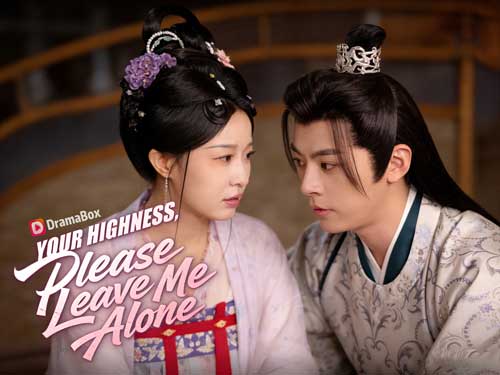
Juliet, portrayed with clarity and warmth by Tian Yuqing, embodies the idea of an independent woman in a historical setting. She is practical, emotionally aware, and unafraid to draw boundaries. Her refusal to immediately forgive or accept Elijah’s affection gives the story credibility. This is not a love won through persistence alone, but through growth and respect.
Visually, the drama leans into soft color palettes and intimate framing. Rather than grand palace shots, the camera often focuses on private moments that emphasize emotional connection. This choice reinforces the story’s focus on personal relationships over political spectacle. The pacing is gentle but consistent, allowing the romance to develop naturally.
Thematically, the series blends historical romance with modern sensibilities. Issues like female autonomy, emotional responsibility, and mutual respect are woven seamlessly into the narrative. Even elements like counterattack moments, where Juliet cleverly navigates social pressure or reclaims control of a situation, feel empowering rather than melodramatic.
For global audiences, accessibility plays a major role. Clips shared on YTb and official DramaBox platforms helped build buzz, while the Cast performances added credibility and warmth. The chemistry between the leads feels lived in rather than forced, making their interactions enjoyable even when they disagree.
What truly sets this series apart is its understanding of consent in romance. Elijah’s pursuit, while persistent, is never portrayed as entitlement. Juliet’s repeated refusals are respected within the story, giving emotional weight to the eventual softening of her stance.
Devotion Without Possession: A Romance That Feels Safe to Love
Perhaps the most surprising achievement of Your Highness, Please Leave Me Alone Chinese Drama is how it redefines devotion. In many romantic stories, especially those involving royalty, devotion is often intertwined with control. Here, it is framed as consistency without coercion.
Elijah’s love for Juliet is relentless, but it is also patient. He shows up, but he does not corner her. He helps, but he does not demand gratitude. He confesses, but he accepts rejection. This portrayal aligns strongly with the type of male lead that English speaking audiences increasingly prefer: emotionally available, accountable, and capable of growth.
For viewers familiar with Western romance tropes, Elijah feels like a historical answer to the modern question of what healthy persistence looks like. He does not argue Juliet into loving him. He demonstrates that he can exist within her boundaries. That difference transforms the entire dynamic.
The hidden identity trope, often used to manipulate or deceive in romance narratives, is handled with surprising care. Elijah’s alternate identity is less about tricking Juliet and more about meeting her where she feels safe. This reframing makes the trope feel less problematic and more emotionally grounded. When the truth inevitably surfaces, it does not feel like betrayal. It feels like exposure.
The drama also understands the appeal of slow earned intimacy. Instead of dramatic confessions, we get shared silences, cooperative problem solving, and moments of unspoken understanding. These are the scenes that linger with viewers. They suggest that love is not proven through grand gestures, but through reliability.
Personal Take and Final Thoughts: A Comfort Watch with Substance
Watching Your Highness, Please Leave Me Alone Chinese Drama feels like sipping tea on a quiet afternoon. It is comforting, amusing, and unexpectedly thoughtful. This is not a drama that demands intense emotional investment or leaves viewers emotionally drained. Instead, it offers a warm exploration of love that grows through understanding rather than force.
If there is a criticism, it might be that viewers seeking intense palace politics or darker conflict may find the stakes relatively gentle. However, that softness is also the show’s greatest charm. It knows what kind of story it wants to tell and does so without overcomplication.
For fans of BG romance, royalty themed stories, and narratives centered on strong female leads, this drama is an easy recommendation. It respects its characters, its audience, and the idea that love should be a choice rather than an obligation.
As the story concludes, one truth becomes clear. Pride can be set aside, identities can be changed, but genuine affection cannot be faked. That message lingers, making Your Highness, Please Leave Me Alone Chinese Drama a memorable addition to the growing library of modern minded historical romances.
Cast and Creative Team Spotlight
Zhou Tishun as Elijah Rowley
Zhou Tishun delivers a nuanced performance as the devoted yet self aware seventh prince. A Chinese mainland actor from Zhuji, Zhejiang, he has appeared in popular productions such as Story of Kunning Palace, The Litchi Road of Chang’an, Douluo Continent, Du Hua Nian, Mountain God, and My Name Is Yu Lanchuan. His portrayal balances charm and vulnerability, redefining the image of a royal male lead.
Tian Yuqing as Juliet Lovell
Born on March 5 in Shandong and a graduate of the Beijing Film Academy, Tian Yuqing brings elegance and emotional intelligence to Juliet. Known for works like Chairman Sir, The Bottom Champion, and Second First Love, she captures the essence of a heiress determined to live life on her own terms.
Director Xian Axian
A rising young director, Xian Axian is known for shaping emotionally engaging short dramas. His works include Save Me! This Husband Is Too Clingy, After Rebirth, I Became the Power Minister’s Precious, and Not Fond of the Empress’s Charm? The Emperor Is Just Saying One Thing and Meaning Another. His signature style blends humor with emotional sincerity, perfectly suited to this story.