




👑🐦🔥Through Ashes Their Sorrow Awakens HD Drama Official Full Dramabox: Trading Fake Death for Rebirth, Using Success to Scorn Her Destroyers
Family DramaBox
 2025-12-09
 1251
1251👑🐦🔥Through Ashes Their Sorrow Awakens HD Drama Official Full on Dramabox: Trading Fake Death for Rebirth, Using Success to Scorn Her Destroyers
The landscape of short-form cinema is often dominated by rapid-fire plots and formulaic emotional beats. Yet, every so often, a title emerges that transcends the format, elevating its genre to an art form. Through Ashes Their Sorrow Awakens (TATSWA) is precisely that phenomenon. This is not merely a drama about revenge; it is a profound and meticulously crafted psychological study of familial toxicity, betrayal, and the supreme, cleansing power of self-liberation. The DramaBox hit distinguishes itself by turning the heroine's counterattack into something almost ceremonial , crafting a tragedy so emotionally deliberate that its climax becomes a metaphorical birth.
This review will dissect the brilliance of TATSWA, exploring its narrative structure, its sophisticated use of symbolism, and how its deeply flawed characters—the victim, the villain, and the blind betrayers—create one of the most compelling and cathartic viewing experiences in recent memory.

Open DramaBox to watch for free
Part I: The Crucible of Betrayal – Manufacturing the Scapegoat
The story’s core strength lies in its relentless establishment of a foundational injustice. The narrative begins not with a choice, but with a stark, brutal fact: Ashley Langston, the biological daughter of the Langston family, is dehumanized and imprisoned for a crime she never committed. Her life is destroyed by the chillingly calculated manipulation of her adopted sister, Lilith.
1. The Power of Selective Blindness
The collective failure of the Langston family—the parents, the brother, and the fiancé, Ethan Hawthorne—to acknowledge Ashley's truth is more than a simple plot contrivance. It functions as a powerful, painful commentary on human psychology. They embody the destructive "Golden Child/Scapegoat dynamic," where maintaining the convenient narrative (Lilith is fragile and innocent) overrides facing the monstrous truth (Lilith is a malicious schemer).
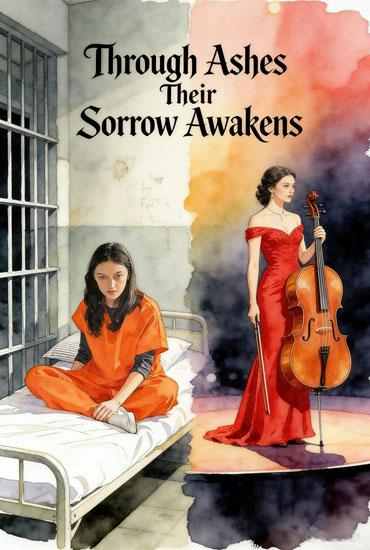
Ashley’s return from prison is a jarring reentry into a hostile environment. The family's immediate focus on Lilith's well-being or public performance, such as a cello recital, underscores their chronic and profound emotional neglect.
2. The Calculated Weapon of Gaslighting
The early episodes are a masterclass in demonstrating how abusers weaponize psychological tactics. The family's conversations are textbook examples of gaslighting, successfully rewriting history and forcing Ashley to exist in a manufactured reality where she is the villain.
The Framed Fallacy: Lilith manipulates everyone with a chilling grace, framing Ashley and systematically destroying her reputation.
Ethan's Cowardice: Ethan, the fiancé who once loved Ashley, chooses Lilith's tears over Ashley's truth. His failure is not in choosing a different person, but in failing to question the lie. He is not an evil character, but a weak and blind one, who collapses under pressure and chooses convenience over loyalty. His participation in a fake wedding for Lilith’s happiness deepens the emotional wound, mirroring how people cling to false narratives to avoid their own guilt.
The Cruelest Act: The episode involving Lilith intentionally preventing Ashley from reaching her inhaler during an allergic reaction, only to rush the family dog to the vet while Ashley gasped on the floor, is described as the show's cruelest moment. This act functions as a poignant metaphor for the family's completely inverted value system.
3. The Climax of Abandonment
The narrative tension escalates to a moral crucible with the staged kidnapping and bomb threat. Lilith's chilling instruction to the kidnappers to "hit her where it won't leave a mark" highlights her cold, strategic malice. The family’s final, irreversible betrayal is their decision to save Lilith and abandon Ashley, whom they believe is about to die. Their subsequent cognitive bias is profound: they conclude Ashley must have been the mastermind simply because she survived, unable to see her as anything other than a source of trouble.
Ashley's resulting claustrophobic breakdown—forced to confront her prison trauma in a dark room—is the tragic nadir, a moment that meticulously sets the stage for the epic rebirth.
Open DramaBox to watch for free
Part II: The Fiery Rebirth – Vengeance as Self-Liberation
This is where TATSWA shifts from a mere tragedy to a story of profound transformation. Ashley's choice to stage her own death is a cinematic masterpiece of ultimate self-liberation. Her silence becomes sharper than screams; her calmness speaks louder than any justification. The brilliance is in how the narrative frames her suffering, showing her metamorphosis instead of her breakdown.
1. The Symbolism of the Flame
The drama uses the imagery of fire with symbolic precision. The flames are not just a spectacle; they are the anchor of the entire narrative.
Destruction and Cleansing: The fire represents the destruction of lies, the end of blind devotion, and the cleansing power of loss. Ashley lets the flames wipe away her past.
A Ritual of Transformation: Ashley's choice to walk into the fire is not defeat; it is a decision shaped by years of betrayal. It is a ritual of transformation, a psychological reset. The moment she steps into the burning wedding hall is the birth of a legend.
The Ultimate Statement: The fire is not an accident—it is a statement. It is the moment the adopted daughter's lies become ash and the biological daughter's sorrow becomes the spark of a new beginning. Ashley does not die; she walks away reborn. If reincarnation had a modern cinematic form, this would be it.
2. The Family's Karmic Reckoning
The chaotic eruption of the wedding hall and her family's panic is the powerful moment where regret finally arrives, but too late. By staging her death, Ashley doesn't just escape; she becomes a ghost, a perpetual source of guilt that will haunt her betrayers.
The devastating realization for the family, the "come-to-Jesus" moment, is triggered by the simultaneous delivery of prison videos—undeniable proof of Lilith's malicious instruction to have Ashley assaulted.
The Bitter Tonic: The family's tears and regrets are a bitter tonic. They haven't just lost a daughter; they have lost their peace and their moral compass.
Visceral Eruption: Ethan's physical retaliation against Lilith—a sharp slap—is a visceral eruption of years of misplaced love and monumental self-deception.
Poetic Justice: The swift justice of seeing Lilith thrown into prison, suffering the exact fate she engineered for Ashley, completes the first arc of revenge, providing textbook "Poetic Justice".
Part III: The Queen of Indifference – Mastery and the Concealed Identity
From the ashes, the story shifts, and the plot becomes a Counterattack built on Concealed Identity. Everyone who betrayed Ashley is now haunted by an unsoothable guilt. Their regret and grief become the real punishment, the real fire.
1. Mastery and the Cello
Ashley's transformation under the mentorship of Mr. Winkler is the glow-up of the decade. She is not written as a helpless victim; she is observant, restrained, and painfully aware of how power works. Her rebirth is earned, not forced.
Symbol of New Life: The cello, which she masters and plays as a renowned cellist, is a symbol of her innate talent, disciplined focus, and new, unburdened life.
Elevation: By achieving professional and personal mastery entirely separate from the Langston name and fortune, Ashley elevates her life to a level her old family could never reach. This arc deeply resonates with classic literary tropes of the exiled hero returning in a new guise, like The Count of Monte Cristo.
2. The Ultimate Flex: Indifference
The final act of TATSWA pivots from physical revenge to profound psychological warfare. Ashley, now thriving under her Concealed Identity, confronts her past not with anger, but with the cold, cutting edge of indifference.
The Most Devastating Blow: The encounter with Ethan at her concert is the narrative peak of her counterattack. Ethan, broken and regretful, recognizes her, but Ashley’s cool, polite denial—"You've mistaken me for someone else"—is the most devastating blow.
Vengeance as Absence: There is no need for grand speeches or gloating. Her success and her refusal to acknowledge their shared history render him insignificant. This is a powerful subversion of the typical revenge climax.
The Barrier: Her new partner, who shields her from Ethan's desperate reach, symbolizes the unbreachable boundary she has erected. Ashley's life has moved to a plane where her former family exists merely as uncomfortable shadows from a distant past. She has mastered the art of the elegant exit, and her silence speaks volumes.
3. The Unbroken Cycle of the Abuser
Meanwhile, Lilith's continued suffering in prison, subjected to the very bullying she orchestrated, is a constant, satisfying echo of karmic retribution. Her plan to repeat the bombing scenario upon release highlights a key thematic truth: the abuser, unable to evolve, resorts to her only known pattern of malice, setting up a final confrontation that will showcase Ashley's new strength against Lilith's predictable villainy.

Open DramaBox to watch for free
Final Verdict: The Emotional Punch and Thematic Confidence
With so many short-form dramas being released, Through Ashes Their Sorrow Awakens stands out due to its unique blend of character depth, thematic symbolism, and narrative confidence.
Character Depth: Ashley’s strength lies in her emotional restraint and profound internal strength. Lilith is crafted as the villain audiences love to hate: charming, poised, and terrifyingly realistic in her cruelty. Ethan is the perfect tragic male lead: weak and blind, his arc demonstrates how slowly people awaken from the lies they willingly accepted.
Emotional Punch: Every scene is loaded with tension. The cinematography leans into close-ups that capture regret, panic, and the tidal wave of realization hitting the characters. The pacing is sharp, ensuring no emotional beat is wasted. The quiet scenes feel heavy, constantly aware of the story's own tragedy.
Cinematic Poetry: The fire scene is the emotional and visual highlight. It is not chaotic for spectacle's sake but is built carefully, with sound design emphasizing stillness. The final image of Ashley walking away from the flames is the emotional signature of the series, delivering closure, empowerment, and devastation simultaneously. It is an act of cinematic poetry.
The drama succeeds because it grounds its sensational plot in relatable emotional trauma. It provides a blueprint for reclaiming agency after profound betrayal. The ultimate victory is not just over the villain, but over the pain of the past itself. By denying the Langston family any absolution and giving Ashley the freedom to define her own future , the ending is harsh, honest, and thematically consistent.
Through Ashes Their Sorrow Awakens is not just a tragedy; it is a meditation on pain, rebirth, and the power of choosing yourself even when the world refuses to. It is the definitive comeback story of the season, a rallying cry for anyone who has ever felt overlooked or abandoned. It is one of DramaBox's strongest recent releases.