




Trash the Past, Own Myself Chinese Drama Free Full Movie: When Rebirth Is Not About Love, but About Walking Away [ Rebirth to 90s & Counterattack]
Comeback DramaBox
 2025-12-17
 2055
2055✍🤵Trash the Past, Own Myself Chinese Drama: A Man Who Rewrote His Fate by Leaving
Click here to watch full movie online and get more information👈
🌐Introduction: What If Rebirth Is Not Meant to Fix Anything
In most rebirth dramas, the past exists to be corrected. Love is rekindled, families are repaired, and regret becomes a shortcut to redemption. Trash the Past, Own Myself Chinese Drama refuses that comfort from its very first episode.
Simon Mort’s rebirth does not come with ambition, revenge, or heroic determination. It comes with exhaustion. He remembers a lifetime spent giving, enduring, forgiving, and being taken for granted until his final breath. When fate places him back at the starting point, he makes a decision that feels almost rebellious in a family centered Chinese Drama narrative. He leaves before anyone can ask him to stay.
This choice reframes the entire story. Instead of asking how a man can save his family, the drama asks whether a man is obligated to sacrifice himself again simply because others are not ready to lose him.
Open DramaBox to watch for free
📺Main Cast Introduction
Qiu Haoxuan as Simon Mort
Chinese name 邱浩轩
Born August 23, 1993, and trained at the Central Academy of Drama, Qiu Haoxuan delivers a restrained and emotionally disciplined performance. His portrayal avoids melodrama, allowing silence and posture to convey Simon’s internal shift.
Ding Haixia as Sue Hart
Chinese name 丁海霞
Born July 9, 1998, Ding Haixia captures the slow collapse of emotional certainty with precision. Her performance reflects regret not as hysteria, but as realization that arrives too late.
Qiang Hongsen as the Son
Chinese name 强泓森
A seasoned child actor, Qiang adds depth to the generational consequences of abandonment, grounding the narrative in lived emotional reality.
📃Storyline: A Second Life Without a Second Chance
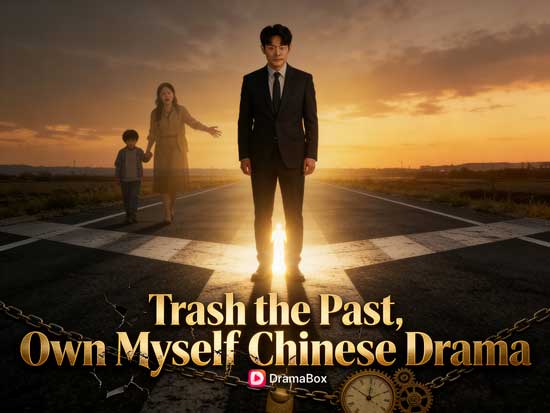
The plot of Trash the Past, Own Myself Chinese Drama unfolds with deceptive simplicity. Simon Mort, once defined by responsibility, chooses independence over repetition. He walks away from his marriage with Sue Hart and distances himself from his two sons before emotional damage turns into lifelong resentment.
What follows is not a triumphant comeback but a slow burn narrative told through separation. Simon builds a quiet life focused on dignity and autonomy. Meanwhile, the story shifts perspective to those he left behind. Sue begins to understand how much emotional labor Simon carried. The children grow up wrestling with confusion, anger, and longing.
The drama’s most striking decision is its refusal to engineer coincidence or forced reunions. Time passes realistically. Apologies arrive too late. Guilt does not open doors that were closed by choice. Simon’s resolve remains firm, not because he is cruel, but because he is finished negotiating his worth.
This structure turns the rebirth trope into a mirror, reflecting the cost of emotional neglect rather than glorifying revenge.
💡Highlights: Why This Drama Feels Different
Several elements distinguish Trash the Past, Own Myself Chinese Drama from typical rebirth or family redemption stories.
First, the strong male lead is defined by emotional boundaries rather than dominance. Simon never raises his voice or asserts control. His power comes from consistency. Once he leaves, he does not waver.
Second, the portrayal of family regret is unromanticized. Sue Hart’s awakening is gradual and painfully realistic. She is not demonized, nor is she excused. Her remorse exists alongside the irreversible damage already done. The children’s storyline reinforces this theme, showing how absence becomes a shaping force rather than a temporary wound.
Visually and tonally, the drama maintains restraint. There are no exaggerated confrontations or manipulative music cues. Silence is allowed to linger. Ordinary moments carry emotional weight. This grounded approach enhances the realism and makes the regret feel earned rather than scripted.
The setting subtly evokes a 90s atmosphere without relying on nostalgia as a gimmick, reinforcing the idea that the past is not something to romanticize or reclaim.
👀Not a Comfort Watch, but an Honest One
Open DramaBox to watch for free
This drama will divide audiences, and that is its strength. Viewers accustomed to reconciliation arcs may find Simon’s refusal unsettling. But that discomfort is intentional.
Trash the Past, Own Myself Chinese Drama speaks to a modern audience increasingly aware of emotional labor, unequal sacrifice, and toxic expectations disguised as family duty. It validates the idea that walking away can be a form of self respect rather than abandonment.
The series does not claim Simon’s choice is painless. It simply insists that pain alone is not a reason to return. That honesty makes the drama linger long after the final episode.
For viewers browsing DramaBox for a Full Episode experience that challenges traditional morality rather than reinforcing it, this title stands out sharply.
🚶♂️Conclusion: When Leaving Is the Ending
In the final analysis, Trash the Past, Own Myself Chinese Drama is not about revenge, reconciliation, or redemption. It is about finality.
Simon Mort’s story reminds viewers that rebirth does not obligate repetition, and regret does not guarantee forgiveness. Some doors close not out of hatred, but out of self preservation.
In a genre crowded with second chances, this drama dares to say that sometimes the bravest ending is choosing not to return.