




Ruling Over All I See II: Path to Dominion :A Story of Ascending to Dominion Amidst Turmoil: A Plot Full of Passionate Revolts Concealing Warm Emotions
Counterattack DramaBox
 2025-12-30
 392
392Ruling Over All I See II: Path to Dominion : A Story of Ascending to Dominion Amidst Turmoil: A Plot Full of Passionate Revolts Concealing Warm Emotions
Click here to watch the entire series of Ruling Over All I See II: Path to Dominion
Introduction: Through turbulent times to fulfill the mission, with passion comes a comeback, and hidden within is warmth.
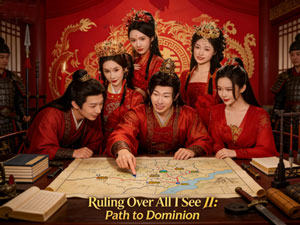
In the genre of ancient costume dramas and power struggles, "Ruling Over All I See II: Path to Dominion" centers around the main storyline of "the time-traveler Judah Shaw rescuing his wife and seizing power through a power struggle". It incorporates the characteristics of the Chinese introduction, which is "a blend of passion and warmth, and coexistence of power politics and brotherly bonds". With a tight plot and strong emotional tension, it has become a model of short dramas with "low budget but grand scale". When the modern soul of Judah Shaw travels back to ancient times, before enjoying the stability of multiple wives, he finds himself in a desperate situation after his wife is captured. From passive resistance to taking the initiative to seize power, he navigates through the swordplay and chaos to carve out his own path of kingship. This article will, based on the core style of the Chinese introduction, analyze the charm of this masterpiece that combines time-traveling, power struggles, and passionate warmth from the dimensions of plot structure, emotional expression, and audio-visual presentation, and explore the profound expression of "seizing power in a chaotic era and keeping the heart's original intention" in "Ruling Over All I See II: Path to Dominion".
Open DramaBox to watch for free
Plot Summary: Crossing through a wedding encounter with a robbery, achieving a power reversal and initiating a rebellion.
Judah Shaw accidentally transmigrated to the ancient world and was fortunate enough to marry three wealthy wives. He had thought that he could start a peaceful and comfortable life in the ancient times by taking advantage of his time-traveling ability. However, fate played a cruel joke on him. The tranquility of his new marriage was soon shattered - his second wife, Wila Zorath, was abducted by the powerful Loti sect. Their purpose was clear and domineering: they wanted to force Judah to surrender and submit, turning him into a tool for their expansion of power.
The inner determination kept Judah resolutely refusing to give in. In order to regain his wife and protect his life, he set out on a path to rescue her. With the modern thinking and extraordinary courage brought by the time travel, Judah reversed the situation against the Loti sect and successfully defeated the sect leader, safely rescuing Wila. Thinking that the crisis had been resolved, he was unexpectedly pursued by the frenzied Lan Woaton forces, falling into a new round of life-and-death predicament.
In a desperate situation, Judah unexpectedly linked himself with the defeated leader of the Loti sect, achieving a qualitative leap in his strength. With this newly acquired power, he easily evaded Lan Woaton's pursuit and regained his safety. Through this battle, Judah clearly saw the cruelty and injustice of this chaotic world, and realized that "enduring and seeking peace" could not bring true stability. Therefore, he no longer confined himself to protecting his small family. He determined to launch a rebellion for justice, take control of power in this chaotic world, and open up a bright path for himself, his companions, and all the people in the world. On this road of rising up and seizing power, he will also encounter like-minded partners, undergo a transformation from fighting alone to being followed by many, and stage a series of chapters filled with passion and warmth.
Highlights: The plot is tightly structured with numerous twists and turns, featuring both intense emotions and warmth running parallel throughout.
1. Plot setup: The storyline is well-paced without any delays, and it features numerous twists that captivate the audience.
The core highlights of this series lie in its "tight pacing" and "dense twists", which perfectly align with the characteristics of short dramas with a low budget but a grand scale. The opening scene quickly sets the background of the time-travel and the marital setup, using only a small amount of space to establish a peaceful life, and immediately presents the core conflict of "the wife being captured", quickly bringing the plot into a tense state; during the rescue of the wife, Judah seems to be in a disadvantaged position, but he uses modern thinking and on-the-spot adaptability to overcome dangers many times. Each seemingly desperate scene hides a twist; for example, when facing off against the leader of the Loti sect, it seems that the power is vastly imbalanced, but he uses the environmental advantages and the opponent's flaws to complete the counterattack; after rescuing the wife, the plot design of "coming out of the wolf's den and entering the tiger's lair" continuously escalates the conflict, and the setting of "binding the enemy leader's power" is another key twist, which not only reasonably enhances the protagonist's strength but also lays the groundwork for the subsequent "taking over the power of the rebellion". There are no redundant plots throughout the series, and each episode has new conflicts and new highlights, keeping the audience in a high level of immersion.
2. Plot Climax: Battle to Save Wife Reveals Strength, Binding Power Stabilizes Beliefs
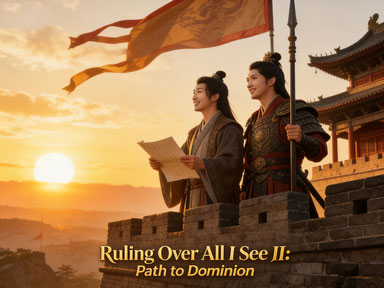
The climax and emotional peak of the entire drama are concentrated in the two key scenes: "Loti sect's wife-saving battle" and "Binding Force's determination to rebel". In the wife-saving battle scene, the camera focuses on the altar of the Loti sect. Wila is bound in the center, and the sect leader approaches with a sharp weapon, creating an atmosphere of extreme tension. Judah enters alone and faces the siege of the congregation. He calmly responds and uses modern tactical thinking to disassemble the enemy formation, gradually approaching the altar. The final confrontation with the sect leader is shown through close-ups of the movements and expressions of both characters. Amidst the swordplay and swordsmanship, Judah shifts from passive defense to active counterattack, ultimately defeating the leader and saving Wila. At the moment of holding Wila in his arms, his eyes are filled with worry and relief, perfectly conveying the tender sentiment of "guarding the small family". The scene of Binding Force is filled with a sense of destiny, after defeating the leader, a mysterious force actively enters Judah's body. His eyes gradually shift from initial shock and confusion to determination. The camera pulls back, and he stands on the top of the altar, looking down at the panicked congregation below. The sounds of the common people's cries in the chaotic times echo in his ears. Finally, he clenches his fists and makes up his mind to launch a rebellion and take control of power. This plot elevates the storyline from "saving the small family" to "taking control to save the larger community", completely opening up the protagonist's perspective and pushing the passionate atmosphere to its peak.
Open DramaBox to watch for free
3. Cinematography: The ancient style has a strong sense of texture, and the lighting and shadow create a more elevated visual composition.
The series is highly ingenious in its use of camera language, creating a rich ancient style and a grand atmosphere of the chaotic times with limited resources. It also uses changes in light and shadow to depict the protagonist's mood and the expansion of his vision. When depicting the peaceful life in the early stage, warm tones and soft natural light are often used, such as the flowers and plants in the courtyard and the candlelight inside the house. The composition is wide and relaxed, highlighting the stability and comfort of life. When the wife is captured and the protagonist sets out on the path to rescue her, the light changes to a cold tone, and the scenes are mostly dark forests and strict religious strongholds. The camera mainly uses tight close-ups and close-ups, combined with shaky handheld shots, highlighting the tension and danger of the situation. In the scene of the rescue battle, the contrast of light and shadow is intense. The fire on the altar contrasts sharply with the surrounding darkness, illuminating Judah's fighting figure and symbolizing his determination to protect the warmth. In the scenes of binding forces and deciding to rebel, the camera shifts to a grand panoramic view. A touch of golden light is integrated into the cold tones, illuminating Judah's determined face, symbolizing his shift from "guarding the small family" to "taking control of the world" in terms of vision expansion. In addition, the depiction of ancient-style clothing, weapons and props, as well as architectural details is concise yet precise, making the ancient style atmosphere more realistic and enhancing the immersive experience of watching the series.
4. Emotional Expression: Passionate Reversal Conceals Warmth, Combining Hardness and Softness Is Even More Touching
Another major highlight of the series lies in the perfect integration of "passionate rebellion" and "affectionate protection", which makes the characters more vivid and the plot more compelling. The passionate storyline focuses on Judah's path of rebellion, from saving his wife alone to his determination to rebel. Every battle and every breakthrough is filled with a sense of power, satisfying the audience's expectations for "thrilling rebellions". The emotional storyline runs throughout, with Judah's protection of Wila not only being the motivation for saving his wife but also his steadfast in the chaotic times. The embrace when they meet again, the mutual concern in times of danger, add a touch of warmth to the cold chaos. Additionally, the friendship between Judah and the companions he encounters later, from being strangers to trust, from fighting side by side to sharing life and death, also adds a touch of warmth to the plot. This "combining strength and softness" emotional expression has enabled the series to break away from the simple "action romance", featuring both thrilling battle scenes and touching emotional moments, allowing viewers to experience emotional release while also finding emotional resonance.
Acting & Characters: Distinctive character arcs, precise and touching performances
1. Main character Judah Shaw: From a time traveler to a ruler, his growth arc is complete and three-dimensional.
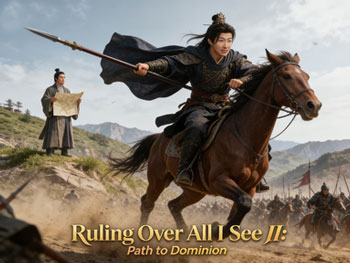
Judah is the central character of the entire drama. The actor skillfully portrays his complete growth arc - from a "life-enjoying time traveler", to a "husband protecting his family", and finally to a "revolutionary in charge of power". In the early stage, he played the role of a time traveler, with his eyes showing curiosity and ease about ancient life, his speech tone being casual, even with a touch of modern humor. This portrayal vividly depicted the state of "wanting to live a peaceful life upon arrival". After his wife was captured, his eyes instantly became determined, and his tone became calm. The perseverance during the rescue of his wife and the bravery during the battle perfectly embodied the image of a "husband fighting to protect". After defeating the leader of the Loti sect and binding the power, his eyes gained more depth and responsibility. From the initial confusion to the later determination, this portrayal perfectly demonstrated the transformation of "expanding one's perspective". After deciding to rebel, his aura completely erupted. Every gesture and movement exuded the authority of a leader, yet when facing Wila and his companions, he still retained a touch of tenderness, making the character more three-dimensional and full. The actor, through meticulous emotional control and body language, made each transformation of Judah natural and smooth. From "the small self" to "the big self" of growth, it was highly infectious.
Open DramaBox to watch for free
2. Main character Wila Zorath: Weak yet resilient, possessing both tenderness and strength.
Wila's character design breaks the stereotype of a "vessel waiting to be saved", and the actress precisely portrays her as having a "weak appearance but a resilient heart". During her captivity, she did not simply cry and wail; instead, she tried to remain calm and even utilized her intelligence at critical moments to convey information to Judah, demonstrating extraordinary courage. After being rescued, she did not become a burden to Judah; instead, she chose to support his decision and managed the aftermath and comforted people for him in her own way. The actress perfectly combined Wila's vulnerability and resilience through her expressive eyes and delicate expressions. The emotional interaction between Wila and Judah is genuine and touching, serving as Judah's emotional support and an important driving force for his progress, making the theme of "warmth and protection" more tangible.
3. Antagonistic characters (Leader of the Loti sect, Lan Woaton): Brutal yet well-structured, they drive the plot to a higher level.
The villainous characters in the series are well-structured with depth. They are not reduced to simplistic "pure evil" stereotypes but rather their personalities are revealed through details. The actor who played the leader of the Loti sect portrayed the "domineering and powerful" traits with great precision through sharp eyes and arrogant tone. However, his loyalty to the sect and his obsession with power also added a touch of realism to the character. The actor who played Lan Woaton created a "sly and cunning" image. His pursuit was not purely malicious but stemmed from the struggle for power and the fear of Judah's potential. This "motivated evil" made the conflict more reasonable. The strength of the villainous characters not only drove the plot forward but also forced Judah to constantly grow and enhance his power, providing a reasonable opportunity for his "expansion of his vision" and "seizing power in rebellion", making the entire story's logic more rigorous.
Personal Opinion: Low-budget but with a grand vision, a perfect balance between passion and warmth
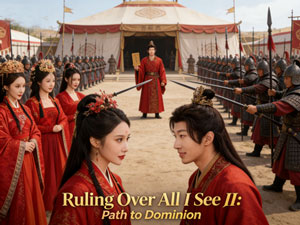
The aspect that most moved me about "Ruling Over All I See II: Path to Dominion" is that, despite its low budget, it presents a grand chaotic world and profound emotional core. It doesn't fall into the cliché of "uninterrupted success and mindless" in the genre of time-travel romance novels. Instead, it allows the protagonist's growth to have a clear trajectory - from fighting to protect one's wife to rebelling for the sake of justice for the entire world. Each transformation has sufficient plot to support it, making the "escalation of the plot" seem genuine and believable. The dual lines of "passionate" and "warm-hearted protection" running parallel in the show not only satisfy the audience's expectations for excitement but also convey the positive theme of "in a chaotic world, warmth is the original intention, and justice is the bottom line". Moreover, the tight plot rhythm and dense reversal design make the viewing experience extremely satisfying, without any feeling of redundancy, and it can be regarded as a model of short dramas with low budgets.
Open DramaBox to watch for free
Final Verdict: A passionate masterpiece with a grand scale and a low budget, combining warmth and sharpness.
"Ruling Over All I See II: Path to Dominion" centers around "a time-traveler rescuing her husband from a chaotic world and then rising up to take power". With its tight plot structure, dense twists, distinct character arcs, and balanced emotional expression, it stands out among similar genres. It features the swordplay and intrigue of ancient-style power struggles, allowing viewers to experience the harshness of the chaotic times and the passion of the uprising; it also incorporates the fun and novelty of the time-travel genre, making the plot more captivating; and it has a core of tender protection, making the story more emotionally charged and compelling, perfectly demonstrating the charm of short dramas with "low budget but grand scope".
If you enjoy historical drama with time-travel elements and power struggle storylines, or are interested in short dramas with a "low-budget but grand-scale" concept, this show is definitely worth watching. From Judah's initial experience of time-travel to the passionate battle to save his wife, from being bound by circumstances to the determination to rebel and seize power, every plot is thrilling.