




My Teenage Mother Korean Drama Watch Online Free: Rewriting Motherhood and Fate [ Time Travel & Rebirth & Family Bonds ]
Fantasy DramaBox
 2026-01-07
 767
767🌸Rewriting Motherhood and Fate: Why My Teenage Mother This Korean Drama Is a Quiet Emotional Powerhouse
Click here to enter the fantasy world of [My Teenage Mother's rebirth]👈
Introduction
What if motherhood did not begin with diapers and lullabies, but with regret, loss, and a second chance at life?
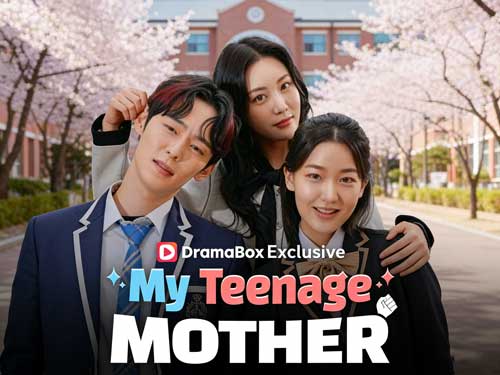
In the crowded landscape of Korean short-form dramas, where high-concept fantasies and emotionally charged narratives compete fiercely for attention, My Teenage Mother Korean Drama emerges with a deceptively simple yet deeply affecting premise. It tells the story of a woman who has already lived, already failed, already lost everything that mattered. When fate grants her rebirth at eighteen, she does not chase romance or ambition first. She chooses her children.
This choice alone sets the tone. Unlike many rebirth or time travel narratives that focus on personal glory, revenge against lovers, or corporate ascension, this drama anchors itself in family bond and maternal responsibility. It asks uncomfortable questions. What does it mean to be a good parent when you know the ending? Can love undo trauma? And is redemption possible when guilt never truly fades?
By blending modern fantasy with raw emotional realism, My Teenage Mother Korean Drama offers more than entertainment. It offers a reflection on intergenerational pain, resilience, and the quiet heroism of choosing to stay.
![My Teenage Mother Korean Drama Watch Online Free: Rewriting Motherhood and Fate [ Time Travel & Rebirth & Family Bonds ]](https://nres.webfic.com/res/seoArticleHtml-6apoYtTR4u.jpg "My Teenage Mother Korean Drama Watch Online Free: Rewriting Motherhood and Fate [ Time Travel & Rebirth & Family Bonds ]")
Open DramaBox to watch for free
Plot Overview
At the heart of the story is Harim Kim, a twenty four year old woman whose life ends abruptly in a traffic accident. Only after death does she realize the cruel irony of her existence. She was living inside a story, a novel where she was never meant to survive long enough to protect the people she loved most.
Her death devastates her two children. Her son grows hardened, angry, and unreachable. Her daughter retreats into silence, carrying scars that no one sees. Their suffering becomes the emotional anchor that defines Harim’s second life.
Reborn at eighteen, Harim awakens not as a carefree teenager, but as a mother with memories that weigh heavier than youth ever should. Her children are also eighteen now, shaped by trauma she remembers all too well. This time, she refuses to be absent. She steps into their lives not as a distant authority, but as a shield.
The narrative unfolds as Harim reclaims stolen assets, confronts long-standing injustices, and dismantles the systems that once crushed her family. Her alliance with Sungho Kim, whose role evolves from emotional support to active protector, adds complexity rather than romance-first convenience. Their relationship is grounded in shared responsibility rather than destiny alone.
The story’s momentum builds through carefully paced counterattack moments, not explosive but deliberate. Each decision Harim makes is informed by pain, foresight, and love. By the time the family reunites, heals, and enters Kyunghee University together, the victory feels earned rather than miraculous.
Within this framework, the drama naturally weaves elements of rebirth, revenge, and time travel, while keeping its emotional core firmly rooted in maternal devotion. The result is a story that resonates far beyond its fantasy setup.
Highlights and Craft Analysis
One of the most striking strengths of My Teenage Mother Korean Drama lies in its portrayal of a strong female lead who does not rely on dominance or cruelty to assert power. Harim’s strength is quiet, strategic, and emotionally intelligent. She listens before acting. She remembers before judging. Her growth is not about becoming ruthless, but about becoming present.
Characterization is handled with remarkable restraint. Harim’s son is not instantly redeemed, nor is her daughter immediately healed. Their arcs unfold gradually, reflecting the real-world truth that trauma does not dissolve simply because intentions change. This realism grounds the drama’s modern fantasy elements, making the emotional stakes believable.
Cinematically, the series favors intimacy over spectacle. Close-ups linger on expressions rather than action. Silence is frequently used as a narrative tool, especially in scenes involving Harim’s daughter. These moments allow viewers to feel the weight of unspoken pain, a technique often overlooked in short-form storytelling.
From a genre perspective, the drama smartly positions itself within the broader ecosystem of Korean and Asian serial content available on platforms like DramaBox. While international audiences may associate rebirth narratives with Chinese Drama traditions, My Teenage Mother Korean Drama adapts the trope with cultural specificity and emotional nuance. Its pacing aligns well with Full Episode binge patterns, and its accessibility through English Version and English Subtitles broadens its appeal across YTb audiences and beyond.
Importantly, the drama does not rely on shock twists alone. Instead, it invests in emotional continuity, allowing viewers to build attachment over time. This approach enhances its long-term replay value and reinforces its status as an Exclusive copyright and First release on the entire network within its category.
A Mother Who Knows the Ending and Still Chooses Love
American audiences have always responded deeply to stories that ask one brutal question: if you could go back and change everything, would you do it differently, or would you finally do it right? My Teenage Mother takes this familiar fantasy and reframes it through a lens that feels unexpectedly mature, emotionally grounded, and painfully intimate.
Harim Kim is not reborn as a naïve heroine eager to chase romance or rewrite her career. She returns knowing exactly how badly her children will suffer if she fails again. This knowledge shapes every scene. It is what makes her presence in the story so unsettling and so powerful. Unlike typical time reset dramas, where the protagonist plays chess with fate, Harim plays defense against trauma.
One of the most compelling aspects for English-speaking viewers is how the series portrays motherhood as a choice rather than a destiny. Harim does not magically become a better parent just because she has a second chance. She struggles. She hesitates. She makes mistakes rooted in fear rather than ignorance. Her son’s anger feels real because it is earned, not exaggerated. Her daughter’s silence is uncomfortable because the show allows it to exist without forcing catharsis.
This approach mirrors the emotional realism found in acclaimed Western family dramas, where healing is slow and progress is uneven. Scenes where Harim simply sits beside her children, saying nothing, often carry more weight than confrontations or dramatic confessions. The show trusts its audience to understand that love does not always look loud.
For American viewers accustomed to high-stakes emotional storytelling, My Teenage Mother offers something rare. It treats maternal guilt as a lifelong companion rather than a plot obstacle. Harim’s rebirth does not erase her past. It amplifies it. Every protective action she takes feels urgent because the audience knows what happens if she fails.
This is not a story about becoming young again. It is about carrying the weight of adulthood into youth and refusing to drop it. That perspective gives the drama a gravity that lingers long after each episode ends.
Family as a Battlefield, Not a Safe Haven
What sets My Teenage Mother apart for international audiences is its refusal to romanticize family by default. In many dramas, family is portrayed as an automatic source of comfort. Here, it is the primary site of conflict, misunderstanding, and emotional debt.
Harim’s rebirth forces her to confront a painful truth. Love alone was never enough. In her first life, she loved her children, but she failed to protect them from systems, people, and silences that caused irreversible harm. This realization becomes the engine of the story’s tension.
American viewers will recognize this theme instantly. It echoes narratives where parents grapple with the consequences of emotional absence rather than physical abandonment. Harim’s enemies are not only external villains but also the social structures that once dismissed her voice. The drama’s revenge elements are subtle, focusing on reclaiming agency rather than delivering spectacle.
Open DramaBox to watch for free
Sungho Kim’s role adds a layer of complexity that appeals strongly to Western storytelling sensibilities. He is not a savior figure. He does not solve Harim’s problems for her. Instead, he becomes a collaborator in accountability. Their partnership is rooted in mutual respect and shared responsibility, which prevents the story from collapsing into romantic dependency.
Several standout sequences center on moments American audiences often find most impactful. Parent-child confrontations that do not end in forgiveness. Apologies that go unanswered. Attempts at reconciliation that fail before they succeed. These moments feel authentic because they resist emotional shortcuts.
The drama also explores how trauma reshapes identity. Harim’s children are not blank slates waiting to be rewritten. They are adults shaped by pain, and the show honors that reality. Harim must earn trust not through grand gestures but through consistency. This slow-burn approach mirrors real-world healing, making the emotional payoff far more satisfying.
In positioning family as both the wound and the cure, My Teenage Mother delivers a narrative that feels deeply relevant across cultures. It challenges the idea that love alone heals and replaces it with a harder, more honest truth. Healing requires presence, accountability, and the courage to stay when it would be easier to disappear.
Why This Story Resonates Beyond Genre Labels
At first glance, My Teenage Mother might appear to fit neatly into the rebirth or fantasy drama category. Yet what makes it resonate with American and English-speaking audiences is how quickly it transcends genre expectations.
The series uses its time reset premise not to escape reality, but to interrogate it. Harim’s second life is not lighter or easier. It is heavier because she knows what is coming. This inversion of the usual fantasy appeal gives the drama a psychological depth that aligns with prestige storytelling rather than escapist fare.
Viewers who enjoy emotionally driven series will appreciate how the show balances plot progression with character introspection. Each step forward feels earned because it is grounded in emotional consequence. The narrative does not reward Harim for knowing the future. It punishes her for underestimating how deeply the past still matters.
For American audiences, this approach recalls stories where personal growth is measured by restraint rather than dominance. Harim’s strength lies in her refusal to repeat patterns, even when doing so costs her comfort or control. This makes her a compelling protagonist not because she wins, but because she endures.
The drama also succeeds in making its hopeful ending feel realistic. The family’s eventual stability is not presented as perfection. It is presented as possibility. The children are not healed beyond recognition. They are simply no longer alone. That distinction gives the finale emotional credibility.
Ultimately, My Teenage Mother resonates because it understands something fundamental about human experience. Second chances do not erase damage. They reveal whether we are willing to confront it. By centering motherhood, accountability, and emotional persistence, the series speaks to viewers who crave stories with depth rather than spectacle.
For those seeking a drama that combines emotional realism with a compelling narrative hook, this is not just another fantasy. It is a story about choosing responsibility over escape and love over fear. That choice, quietly and consistently made, is what makes My Teenage Mother unforgettable.
Personal Evaluation and Comparison
Watching My Teenage Mother Korean Drama inevitably invites comparison to other recent hits in the rebirth genre, most notably the 2023 phenomenon Twinkling Watermelon. While both explore time manipulation and emotional reconciliation, their narrative priorities differ significantly.
Twinkling Watermelon focuses on youth, music, and intergenerational understanding through artistic expression. Its optimism is vibrant and forward-looking. In contrast, My Teenage Mother Korean Drama centers on accountability, maternal sacrifice, and the consequences of absence. Its tone is quieter, heavier, and more introspective.
Rather than competing, the two works complement each other. Where Twinkling Watermelon celebrates possibility, My Teenage Mother Korean Drama examines responsibility. This distinction is precisely where its originality lies.
For viewers seeking a drama that values emotional maturity over spectacle, this series delivers. Its willingness to sit with discomfort, to portray motherhood as both burden and blessing, and to frame revenge as protection rather than destruction sets it apart.
There are moments where the pacing may feel deliberate to the point of restraint, particularly for audiences accustomed to high-intensity plot acceleration. However, this is a conscious stylistic choice rather than a flaw. The story trusts its viewers to feel rather than rush.
Ultimately, My Teenage Mother Korean Drama succeeds not because it reinvents the genre, but because it refines it with sincerity.
Conclusion
In a media landscape saturated with reincarnation fantasies and power-driven narratives, My Teenage Mother Korean Drama stands out by asking a different question. What if the greatest act of rebellion against fate is simply choosing to stay, to care, and to protect?
Through layered performances, thoughtful pacing, and emotionally grounded storytelling, the series transforms familiar tropes into something deeply personal. It invites viewers not only to watch, but to reflect. On family. On regret. On second chances that demand responsibility rather than reward.
For anyone searching for a drama that balances modern fantasy with emotional truth, this is a story worth experiencing.
Cast Spotlight
Lee Jung-ho as Sungho Kim
Lee Jung-ho (原名:Lee Jun-ho / 李俊昊,朝鲜语:이준호) brings quiet authority and emotional depth to the role of Sungho Kim. Born January 25, 1990, he is a South Korean singer, actor, and songwriter. After winning the audition program Superstar Survival in 2006, he joined JYP Entertainment and debuted in 2008 as a member of 2PM, serving as lead vocalist, main dancer, and acrobatics specialist. His performance here reflects maturity and restraint, showcasing his growth as an actor.
Song Yu-lin as Harim Kim
Song Yu-lin delivers a nuanced portrayal of Harim Kim, capturing the duality of youth and motherhood with remarkable sensitivity. Her performance anchors the emotional core of the series, making Harim’s journey both believable and deeply moving.