




The Sweetness That Kills Chinese Drama Watch Online 4K: When Sugar Turns Poison
Toxic Love DramaBox
 2026-01-08
 203
203🍯🥀When Sugar Turns Poison: Inside The Sweetness That Kills Chinese Drama
Click here to travel through Cindy's life in [The Sweetness That Kills] 👈
Introduction: Why This Story Hurts So Good
There is a special kind of satisfaction that comes from watching someone lose everything not through violence, but through their own arrogance. The Sweetness That Kills Chinese Drama understands this pleasure deeply. Instead of loud confrontations or exaggerated twists, it leans into emotional pressure, silent calculations, and the terrifying calm of a woman who has already survived the worst. This DramaBox original does not rush to impress. It waits, observes, and strikes when the audience least expects it.
At first glance, the story seems familiar to fans of Chinese short dramas. A fragile heroine. A powerful man with secrets. A web of lies disguised as affection. But beneath that familiar surface lies something colder and more deliberate. This is not a love story that collapses into revenge. It is a revenge story that weaponizes love itself. The show asks a disturbing question. What if sweetness is not weakness, but strategy. What if playing harmless is the most dangerous move of all.
In an era where short form dramas often rely on shock value, The Sweetness That Kills Chinese Drama stands out by trusting its audience to enjoy patience. It builds tension through restraint, emotional silence, and carefully placed betrayals. For viewers who are tired of empty romance and craving a smarter emotional game, this drama feels like a quiet threat whispered directly into the ear.
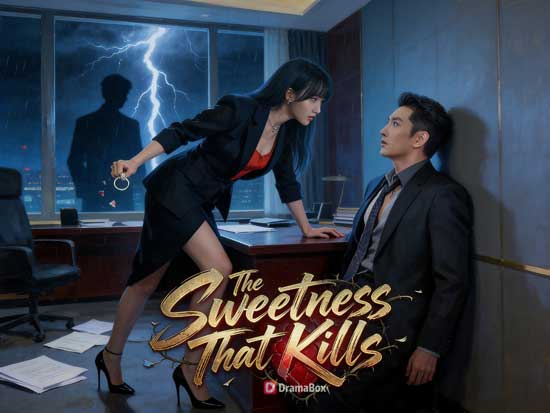
Open DramaBox to watch for free
Plot Without Spoilers: A Trap Built From Kindness
Cindy Lawson enters the story as the perfect assistant. Polite, efficient, almost invisible. She is the kind of woman powerful men stop noticing, which is exactly why she survives. Behind her calm demeanor is a past that nearly ended her life. Betrayed, exploited, and nearly sacrificed for another woman’s survival, Cindy learns early that innocence is something people love to consume. So she lets them believe she still has it.
Julian Spencer represents the kind of villain modern audiences recognize instantly. He does not raise his voice. He smiles. He controls through proximity and promises. His obsession with Quinn Lind is wrapped in loyalty, but slowly revealed as possession. Cindy understands this dynamic better than anyone. Rather than escaping, she steps closer. She accepts the role offered to her and rewrites it from the inside.
What makes the narrative compelling is its structure. Instead of a single explosive reversal, the story unfolds as a series of small victories. Cindy influences relationships without appearing to act. She nudges conversations, reframes misunderstandings, and allows others to destroy themselves. Her so called mistakes are calculated. Her silence is intentional. The audience watches her manipulate outcomes while maintaining the illusion of obedience.
This is where the drama fully embraces themes of modern romance and revenge without falling into excess. The emotional triangle between Cindy, Julian, and Quinn is not driven by jealousy alone, but by control, guilt, and emotional debt. Love here is transactional. Loyalty is conditional. Every relationship carries a hidden price. The show understands toxic love not as obsession alone, but as a system where power flows invisibly until someone decides to redirect it.
By the time the truth surfaces, justice does not arrive as a dramatic verdict. It arrives as isolation. Broken trust. Reputation quietly dismantled. The satisfaction comes from watching the trap close slowly, built from the same sweetness that once hid cruelty.
Main Cast Spotlight
Cindy Lawson portrayed by Gou Yuxi 苟钰浠
Born June 15, 1998, Gou Yuxi is a mainland Chinese actress and a graduate of the Performance Department at Sichuan Film and Television Academy. Known for roles in Divine Doctor Poison Consort, Only Regret That Love Failed to Recognize You, and I Took My Blind Husband to Overturn a Tycoon Family, she brings controlled emotional depth to Cindy, making the character quietly unforgettable.
Quinn Lind portrayed by Huang Bo 黄波
Huang Bo is a mainland Chinese actor whose notable works include Step by Step Into the Trap, The Fire Refining of the Jinyiwei, Star Gate Abyss, Breeze by the Lake, Bright Moon Enters the Cold Night, and Love Has No Cure. His performance adds vulnerability and restraint, redefining the modern male lead archetype.
Julian’s Assistant portrayed by Hu Wenle 胡文乐
Born in Jinhua, Zhejiang Province, standing at 182 cm, Hu Wenle is a Chinese film and television actor and a graduate of Nanchang Institute of Technology. Known for Strawberry Sister’s Workplace Crisis, he delivers a subtle yet crucial supporting role that amplifies the story’s emotional manipulation and moral tension.
The Allure of Watching a Woman Pretend to Be Weak
What makes The Sweetness That Kills addictive to English speaking audiences is not the romance, but the performance of weakness. American viewers are deeply familiar with the fantasy of reinvention. From courtroom dramas to corporate thrillers, there is a shared cultural fascination with the idea that intelligence often hides behind restraint. Cindy Lawson fits perfectly into this narrative tradition, but she does something more dangerous. She never announces her transformation. She never demands recognition. She simply waits until everyone else exposes themselves.
From the opening episodes, the show establishes a rhythm that feels almost deceptive. Cindy is soft spoken. Her posture is careful. Her expressions are controlled to the point of near invisibility. For viewers accustomed to bold female revenge arcs, this can feel unsettling at first. There is no immediate payoff. No dramatic confrontation. No viral monologue moment. Instead, the drama invites you to lean in and notice what is not being said. In American storytelling terms, Cindy is not a superhero. She is closer to an undercover operative embedded deep inside enemy territory, except her weapon is emotional compliance.
This is where the drama resonates strongly with audiences who enjoy psychological thrillers rather than soap operas. Cindy does not overpower Julian Spencer. She studies him. She understands his habits, his insecurities, his need to feel indispensable. Julian believes control comes from proximity. Cindy understands that control comes from patience. Every time she agrees too quickly, every time she lowers her gaze, she is training him to underestimate her. The brilliance of the writing lies in how it turns submission into strategy.
American audiences often gravitate toward stories where power shifts quietly. Think of narratives where the most devastating moments arrive not with explosions, but with documents signed, doors closed, and alliances dissolved. The Sweetness That Kills operates on this wavelength. The show makes betrayal feel procedural rather than emotional. Cindy does not seek revenge for validation. She seeks correction. She wants the world to return to balance, even if that balance costs someone everything.
The romantic tension with Quinn Lind adds another layer of complexity that feels particularly accessible to Western viewers. Quinn is not positioned as a savior. He is flawed, emotionally compromised, and burdened by loyalty to the wrong people. Their connection is defined less by passion and more by recognition. They see each other’s wounds without trying to fix them. For American audiences tired of idealized romance, this dynamic feels refreshingly grounded. Love here is not a solution. It is a risk.
By the end of this narrative arc, the satisfaction does not come from watching Cindy win loudly. It comes from realizing she never needed to raise her voice at all. For viewers who appreciate intelligence over spectacle, this story delivers a deeply satisfying, slow burning triumph.
When Revenge Feels Like Corporate Warfare
One reason The Sweetness That Kills translates so effectively to English speaking markets is its resemblance to high stakes corporate dramas. Strip away the romance and you are left with a story about access, leverage, and narrative control. Cindy’s revenge does not unfold like a melodrama. It unfolds like a hostile takeover.
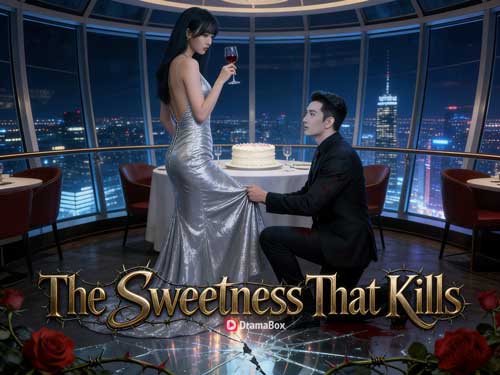
Open DramaBox to watch for free
American audiences are well versed in stories where reputations are currency and relationships function as contracts. Cindy understands this ecosystem intuitively. She does not destroy Julian by exposing a single crime or betrayal. She allows his image to erode piece by piece. She understands that in systems of power, isolation is more fatal than exposure. The drama shows how trust can be redirected, how influence can be rerouted, and how one well placed silence can undo years of dominance.
What makes this approach compelling is its realism. There are no implausible coincidences. Each step Cindy takes is believable within the social architecture of the story. She anticipates reactions rather than forcing outcomes. This mirrors the kind of strategic thinking celebrated in American political and business narratives. The audience is invited to observe the mechanics of manipulation rather than simply react to shock.
Julian’s downfall is particularly effective because it feels self inflicted. He is not defeated by an external enemy, but by his own patterns. His need for control, his habit of underestimating those who appear compliant, and his emotional dependency all become liabilities. Cindy does not weaponize secrets. She weaponizes his predictability. For viewers who enjoy watching powerful figures dismantle themselves, this arc is quietly devastating.
The assistant subplot, often overlooked in similar dramas, adds an additional layer of social commentary. Marriage is used not as romance, but as entrapment. Loyalty becomes a cage rather than a bond. This resonates with American viewers who are increasingly critical of traditional power structures disguised as stability. The drama does not moralize. It observes. And that observational distance makes the critique sharper.
Cinematically, the show reinforces this tone through restrained visual language. Offices feel cold and transactional. Domestic spaces feel staged rather than intimate. There is a constant sense that every interaction is being documented mentally, if not physically. This aesthetic aligns well with the visual grammar of Western thrillers, making the emotional stakes feel universal rather than culturally distant.
In the end, what lingers is not the romance or even the revenge itself, but the unsettling realization that cruelty often wears the mask of professionalism. Cindy’s victory feels earned precisely because it respects the intelligence of the viewer. It does not ask for sympathy. It asks for attention.
Why It Works: Characters, Pacing, and Visual Language
One of the strongest achievements of The Sweetness That Kills Chinese Drama lies in its character construction. Cindy Lawson is written as a strong female lead without relying on exaggerated toughness. She cries, hesitates, and doubts herself. Yet none of these moments weaken her authority. Instead, they humanize her. She understands when to appear like an innocent damsel and when to withdraw emotionally. This balance allows the audience to root for her not because she is perfect, but because she learns faster than everyone else.
Quinn Lind, portrayed as a billionaire figure with emotional scars, avoids the usual cold male lead stereotype. His vulnerability is not romanticized, but contextualized. He is shaped by loss, dependency, and misplaced loyalty. Watching him slowly realize the truth becomes one of the most painful aspects of the story. His arc reflects love after breakup not as healing, but as awakening.
Julian, meanwhile, is the embodiment of betrayal disguised as devotion. His downfall is effective because the drama never rushes to punish him. Instead, it allows the audience to observe his unraveling. Power slips. Allies disappear. Confidence decays. The writing trusts subtlety. There are no grand speeches. Only consequences.
Visually, the series uses restrained cinematography. Close up shots linger just long enough to capture hesitation. Office spaces feel sterile and isolating. Domestic scenes carry a quiet tension that suggests emotional danger rather than comfort. This visual language reinforces the theme that violence is not always loud. Sometimes it is polite, organized, and smiling.
Compared to other revenge focused Chinese dramas, especially longer television series that rely on extended misunderstandings, this short drama excels in efficiency. Similar titles often stretch conflict to fill episodes. Here, every scene advances the emotional chessboard. The pacing respects the short format without sacrificing depth. That is where DramaBox proves its advantage. With Full Episode releases and Free Movie access in English Version and English Subtitles, the platform allows global audiences to experience this tightly constructed narrative without dilution. As part of its Exclusive copyright catalog and First release on the entire network, the series benefits from focused distribution rather than overexposure on YTb style platforms.
Personal Take and Final Verdict: A Quietly Brutal Recommendation
Watching The Sweetness That Kills Chinese Drama feels like witnessing justice served without applause. It is not a comfort watch. It is a tension driven experience that rewards attention. The drama refuses to spoon feed emotions. Instead, it invites viewers to notice patterns, silences, and emotional shifts. This makes it particularly appealing to audiences who enjoy psychological warfare over melodrama.
That said, the restraint may not appeal to everyone. Viewers expecting constant twists or overt romance may find the pacing demanding. Some supporting characters exist more as functions than fully realized individuals. Yet these limitations feel intentional rather than careless. The focus remains firmly on Cindy’s internal transformation and the emotional collapse of those who underestimated her.
In comparison to similar revenge romances, this series distinguishes itself by refusing to romanticize toxicity. Love does not fix trauma here. It exposes it. Revenge is not celebrated as triumph, but framed as reclamation. Cindy does not become cruel. She becomes precise.
For fans of smart revenge narratives, emotionally layered female protagonists, and short dramas that trust silence as much as dialogue, this is an easy recommendation. It proves that sweetness, when chosen deliberately, can be far more lethal than rage.
Closing Thoughts: Let the Quiet Ones Win
At its core, The Sweetness That Kills Chinese Drama is about visibility. Who is seen. Who is ignored. Who survives by being underestimated. In a genre crowded with loud declarations and dramatic confessions, this story whispers. And that whisper lingers.
If you believe the most dangerous person in the room is often the one no one is watching, this drama will stay with you long after the final scene fades.
If you enjoy revenge stories where intelligence outweighs strength and silence speaks louder than confession, this is one DramaBox title worth your time.