




Highborn Matriarch: Power Is the Prize Chinese Drama 4K | A Strong Female Lead, Grace Is Her Weapon
Strong Female Lead DramaBox
 2026-01-16
 267
267When Calm Becomes the Sharpest Blade
Not all battles are fought with raised voices or exposed fury. Some are won with silence, patience, and an impeccable smile. Highborn Matriarch: Power Is the Prize opens its story at precisely this intersection, where restraint becomes resistance and elegance becomes strategy.
Juliet Castro enters marriage not as a romantic heroine but as a product of careful upbringing. Raised within rigid codes of nobility, she understands hierarchy, appearances, and the unspoken rules that govern powerful households. When she marries Stanley Zeller, she expects order, if not affection. What she encounters instead is a web of disrespect disguised as freedom.
Stanley’s contempt for traditionally educated noblewomen manifests in his indulgence of a concubine from a formidable family and his ambiguous closeness with his widowed sister in law. These provocations are not accidents. They are tests. He assumes Juliet will react emotionally, collapse under humiliation, or beg for validation.
She does none of these.
This is where Highborn Matriarch: Power Is the Prize Chinese Drama signals its difference. Juliet does not rush to confrontation. She observes. She listens. She cleans the household chaos with composed efficiency, not because she is weak, but because she understands timing. Power, in her world, is never seized impulsively.
The series resonates strongly with viewers who recognize the pressure placed on women to endure quietly. Juliet’s restraint is not submission. It is preparation. Every measured response lays groundwork for future authority.
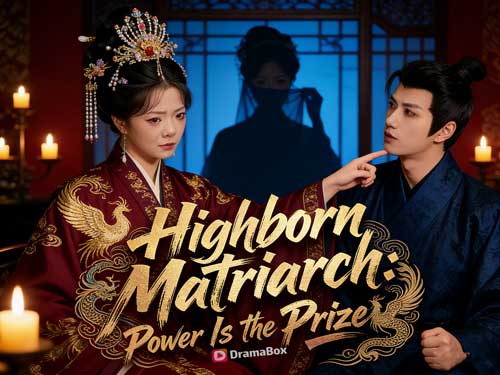
Open DramaBox to watch for free
A Marriage as a Chessboard
Rather than framing the story as immediate vengeance, the drama treats marriage itself as a strategic field. Juliet’s role as lady of the house positions her at the center of domestic power, where decisions about resources, alliances, and reputations quietly shape outcomes.
This is a historical romance that understands intimacy as political currency. Within the Zeller household, every relationship carries weight. Servants watch, relatives calculate, and gossip becomes leverage. Juliet navigates this environment with precision, employing playing dumb as an art rather than a weakness. She allows others to underestimate her, knowing that misjudgment is the most reliable opening in any power struggle.
Her relationship with Stanley unfolds under the banner of love after marriage, but it is not a sentimental arc. It is a slow recalibration. Stanley begins as a man intoxicated by freedom and novelty, dismissive of responsibility. Confronted with a wife who neither competes nor submits, he finds his authority quietly challenged.
The drama’s strength lies in how it handles family intrigue without turning it into melodrama. Conflicts simmer rather than explode, mirroring real dynamics within elite households. Juliet’s actions reflect the reality of women who survive systems designed to constrain them, mastering rules before rewriting them.
Her identity as an heiress further complicates the power balance. She brings not just refinement, but lineage and resources, reminding everyone that she is not a decorative addition, but a stakeholder.
Why the Story Feels Sharp, Not Loud
One of the most compelling aspects of Highborn Matriarch: Power Is the Prize Chinese Drama is its tonal discipline. The series refuses excessive theatrics. Instead, it leans into controlled tension, trusting viewers to appreciate nuance.
Visually, the drama favors composed framing. Scenes are often symmetrical, emphasizing order on the surface while chaos brews beneath. Costumes reinforce Juliet’s authority through subtle evolution, moving from traditional restraint to confident presence without dramatic transformation.
Juliet embodies a strong female lead who understands that visibility is not always power. Sometimes dominance is achieved by becoming indispensable. Her arc reflects an underdog rise that feels authentic because it never abandons realism. She does not suddenly overturn the household. She reshapes it.
While the narrative hints at revenge, it never devolves into cruelty. Juliet’s responses are proportional and purposeful. Each calculated counterattack restores balance rather than indulging in excess.
The drama’s setting evokes the atmosphere of a palace, where etiquette masks ambition and alliances shift behind closed doors. For international audiences, the availability on DramaBox with English Version and English Subtitles opens this layered storytelling to viewers discovering Chinese short dramas for the first time.
Personal Evaluation: Intelligence as the Ultimate Fantasy
From a critical standpoint, Highborn Matriarch: Power Is the Prize Chinese Drama succeeds because it respects intelligence, both in its heroine and its audience. It does not rush emotional payoffs or oversimplify moral choices.
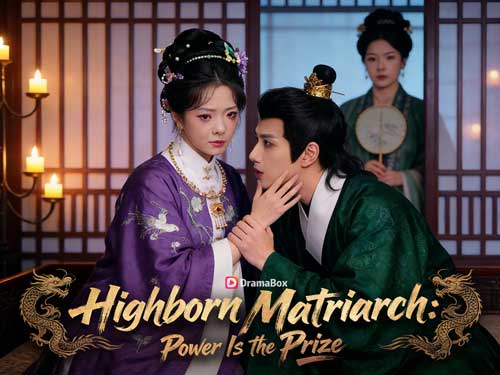
Open DramaBox to watch for free
Some viewers accustomed to rapid escalation may find the pacing restrained. However, this restraint is the drama’s defining strength. Juliet’s power is cumulative, not explosive. Watching her maneuver within constraints offers a different kind of satisfaction, one rooted in recognition rather than shock.
Stanley’s character arc is intentionally uncomfortable. His gradual loss of dominance mirrors the reality of men confronted with women who refuse to play assigned roles. This discomfort is not a flaw, but a deliberate narrative choice.
If there is a limitation, it lies in the relative subtlety of secondary arcs, which occasionally feel underexplored. Yet this focus keeps the spotlight firmly on Juliet, reinforcing the drama’s thematic coherence.
Conclusion: Power Does Not Always Announce Itself
In the end, Highborn Matriarch: Power Is the Prize Chinese Drama offers a quiet but potent message. Authority does not always roar. Sometimes it arranges the room so thoroughly that resistance becomes irrelevant.
Juliet Castro does not overthrow her world. She masters it. For viewers drawn to intelligent female protagonists, marriage based power dynamics, and emotionally controlled storytelling, this drama is a rewarding watch that lingers long after the final scene.
Cast Introduction
Jin Luying as Juliet Castro 金璐莹
Born June 21, 1995 in Jinhua, Zhejiang, Jin Luying is a graduate of the Central Academy of Drama. Her notable works include His Highness Is Not to Be Provoked, Three Dao Plains, and God General Rolling the Curtain. Her portrayal of Juliet blends composure with latent authority, anchoring the drama’s emotional credibility.
Chen Zhengyang as Stanley Zeller 陈政阳
Born January 1, 1992 in Xuzhou, Jiangsu, Chen Zhengyang also graduated from the Central Academy of Drama. His representative works include Longing to Stay Together, Springtime Buzz, Professor Pei, Are You Capable?, Cherished Rose, and Her Unique Temperament. He brings layered complexity to a character designed to evolve under pressure.
Li Zhehan as Stanley’s Younger Brother 李哲翰
A young actor with an extensive resume in television and short dramas, Li Zhehan has appeared in Ordinary Road, Tiger and Crane Demon Master Record, Thoughts Without Match, Spring Flowers Burn, Southern Dream, White Horse Youth Drunk on Spring Breeze, and short dramas such as The Tyrant Father’s Beloved Little Sweetheart and Two Empress Dowagers Reborn.
Pan Haidi as the Maid 潘海迪
A rising new actress, Pan Haidi has appeared in short dramas including The Civet Cat Swaps Fate Step by Step with Fragrance. Her restrained performance adds texture to the household dynamics surrounding Juliet.