




The Heiress Who Undercover Korean Drama Full Movie - DramaBox
Concealed Identity DramaBox
 2025-12-24
 482
482👠💃The Heiress Who Undercover Korean Drama —— When Power Chooses Silence and Revenge Wears a Smile
💼Introduction | What If the Quietest Employee Owns the Building
There is a special kind of satisfaction in watching someone underestimated by everyone in the room.
The Heiress Who Undercover Korean Drama taps into a fantasy many viewers secretly carry. The idea that the person treated as disposable, ignored, or mistreated is actually the most powerful one present. Instead of dramatic entrances or instant reveals, this short drama chooses patience. It lets injustice breathe long enough for the reversal to feel earned.
Set against the familiar backdrop of workplace hierarchy, the story blends class tension, hidden identity, and calculated revenge into a fast moving narrative. What makes it especially engaging is not the twist itself, but the way it unfolds quietly, almost politely, while the audience watches the balance of power tilt inch by inch.
This review looks at The Heiress Who Undercover Korean Drama as a modern workplace fantasy driven by a strong female lead who understands that the most effective revenge often arrives without raising one’s voice.

Open DramaBox to watch for free
🤫Story Overview | A Heiress Who Steps Into the Shadows
Baek Min ha is not supposed to be here. As the sole heir to the wealthiest family in the country, her life should be defined by boardrooms, luxury, and inherited authority. Instead, she chooses invisibility.
Hiding her true background, Min ha joins a small company as an ordinary employee. The reason is simple and personal. She wants to confront Min Tae jin, a man who abuses his position as a boss and treats subordinates as expendable tools. Rather than destroying him from afar, she steps directly into his world.
The workplace quickly reveals its ugliness. Power is abused casually. Credit is stolen. Fear replaces respect. Min ha observes quietly, documenting every injustice while learning how deeply rooted the corruption is. Her concealed identity allows her to see the system clearly, without filters or privilege.
What elevates the narrative is the balance between restraint and action. Min ha does not rush revenge. She builds it carefully, understanding that exposure without proof is meaningless. Each episode adds another layer to her plan, turning everyday office moments into strategic moves.
Along the way, subtle emotional threads emerge. Trust forms where it is least expected. Lines blur between empathy and manipulation. The drama avoids turning Min ha into an untouchable figure. She feels anger. She hesitates. She learns that revenge carries its own cost.
By the time the truth begins to surface, the audience understands that this story was never about humiliation alone. It is about reclaiming dignity and redefining power on one’s own terms.
📋Why It Works | Character Focus and Controlled Tension
One of the greatest strengths of The Heiress Who Undercover Korean Drama lies in its characterization. Baek Min ha is written with emotional intelligence rather than exaggerated dominance. Her power does not come from shouting or dramatic gestures, but from observation and timing.
The antagonist, Min Tae jin, is disturbingly realistic. He is not a caricature of evil, but a reflection of how unchecked authority operates in everyday environments. His behavior makes the story uncomfortable in a way that feels intentional and effective.
The pacing respects the short drama format. Episodes move quickly, yet tension is allowed to simmer. The camera often lingers on reactions rather than actions, emphasizing internal calculation over external confrontation. This stylistic choice reinforces the theme of concealed identity and quiet resistance.
The drama also understands its audience. It offers the emotional satisfaction associated with revenge while maintaining a grounded tone. Instead of relying on shocking twists, it builds anticipation through consistency.
From a viewing standpoint, accessibility enhances its reach. Available on DramaBox as a Full Episode experience, it can be enjoyed as a Free Movie style watch. With English Version and English Subtitles provided, it appeals to a global audience familiar with both Korean and Chinese Drama storytelling. Its First release on the entire network and Exclusive copyright status helped it gain traction quickly, with discussion spreading across platforms like YTb.
🗝️When Power Chooses Silence Before It Strikes
American audiences have always been drawn to stories where power hides in plain sight, and The Heiress Who Undercover understands this instinct almost too well. At its core, this drama is not just about wealth or inheritance, but about restraint. Min-ha begins the story with everything the world defines as success, money, status, a name that opens doors without knocking. Yet she willingly steps into a cramped office, accepts humiliation as part of the job description, and lets her abusive boss believe she is powerless. This decision is the heartbeat of the narrative. It is the quiet before the storm, and for viewers who love slow-burn revenge, that silence is intoxicating.
What makes this arc particularly compelling for a Western audience is how familiar it feels beneath its Korean drama structure. The toxic workplace is instantly recognizable. The boss who belittles employees, steals credit, and weaponizes authority is not a caricature but a reflection of real-world corporate abuse. Min-ha’s concealed identity is not only a plot device; it becomes a psychological experiment. How long can someone endure injustice when they already hold the power to end it? The show stretches this tension deliberately, letting scenes breathe so that every insult lands harder and every small victory feels earned.
The drama shines when Min-ha begins reclaiming agency in subtle ways. She outperforms expectations, manipulates office politics with precision, and slowly turns the company’s internal dynamics against the very man who once controlled her fate. For American viewers who appreciate strategic storytelling, this is where The Heiress Who Undercover truly excels. Revenge is not explosive or immediate; it is procedural, methodical, and deeply satisfying. Each step forward feels like watching a chess match unfold rather than a simple takedown.
Romance enters the story not as a distraction but as a complication. Trust becomes dangerous when your entire existence is a lie, and emotional intimacy risks exposing everything. The chemistry builds through shared moments of vulnerability rather than dramatic declarations, aligning well with audiences who prefer character-driven romance over melodrama. Love here is cautious, earned, and constantly at risk of collapse once the truth surfaces.
By the time Min-ha’s real identity looms close to revelation, the audience is already invested in the aftermath. The question is no longer whether she will win, but what winning will cost her. Will revenge still feel satisfying when it destroys the fragile connections she built while pretending to be ordinary? This moral tension elevates the drama beyond simple wish fulfillment, making it resonate long after the episode ends.
💄A Wolf in Office Clothing and the Art of Controlled Revenge
There is something deeply American about watching a powerful woman choose disguise over domination. The Heiress Who Undercover taps into the fantasy of walking into the lion’s den unarmed, only to discover that intelligence and patience can be sharper weapons than authority. Min-ha’s undercover journey transforms the office setting into a battlefield where emails replace swords and meetings become arenas of psychological warfare.
One of the most appealing aspects for U.S. viewers is how the show reframes revenge as emotional justice rather than spectacle. Min-ha does not destroy her boss publicly at first. Instead, she dismantles his confidence piece by piece. She documents his abuse, exposes his incompetence, and lets his own arrogance accelerate his downfall. This approach aligns with modern audience preferences for smart protagonists who outthink their enemies rather than overpower them.
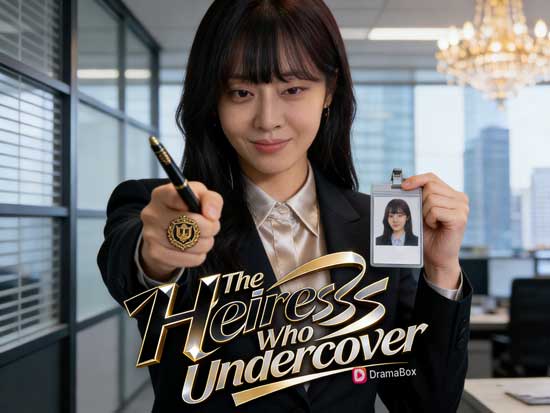
Open DramaBox to watch for free
The show also excels in portraying how power dynamics shift once a victim stops seeing themselves as powerless. Min-ha’s body language changes subtly. Her silence becomes intentional, her compliance strategic. These details make the character feel grounded and believable, especially for viewers familiar with workplace politics. The satisfaction comes not from shocking twists, but from watching a system collapse under its own corruption.
Another standout element is how family legacy complicates Min-ha’s choices. Being an heiress is not portrayed as pure privilege but as a burden filled with expectations and surveillance. Her undercover life becomes the only space where she can act freely, ironically finding autonomy by pretending to have none. This inversion adds emotional depth and invites viewers to question what true freedom actually looks like.
The romantic subplot gains strength through this tension. Falling in love while hiding your identity creates stakes that feel personal rather than dramatic. The potential betrayal is not about money or status but about trust. American audiences often respond strongly to romances built on emotional honesty, and here the looming confession becomes more powerful than any external obstacle.
As the narrative progresses, The Heiress Who Undercover transforms into a story about reclaiming self-worth. Revenge is not the end goal; it is a means of closure. When Min-ha finally stands in her truth, the victory feels complete not because her enemy is defeated, but because she no longer needs to hide to survive.
🧠Why This Hidden Heiress Story Hits So Hard Right Now
Timing is everything, and The Heiress Who Undercover arrives at a moment when audiences are craving stories about accountability, resilience, and female empowerment. The drama resonates because it mirrors conversations happening globally about workplace abuse and the quiet strength required to confront it. Min-ha’s journey feels cathartic precisely because it reflects struggles many viewers recognize, even if they lack her resources.
For American audiences especially, the undercover trope works because it combines fantasy with realism. While most people cannot secretly be heirs, many understand the experience of being underestimated. The show captures the emotional weight of invisibility and turns it into a strategic advantage. Min-ha’s revenge is not loud or reckless; it is patient and justified, making her success feel deserved rather than convenient.
What sets this drama apart from similar narratives is its refusal to rush emotional payoff. Conflicts linger, consequences matter, and victories come with loss. This pacing allows viewers to fully inhabit Min-ha’s internal struggle. The story respects its audience by trusting them to stay for the long game, a quality that appeals strongly to viewers tired of instant gratification storytelling.
The corporate setting also grounds the drama in a relatable environment. No palaces or fantasy worlds are required to tell a story about power and control. Fluorescent lights, cramped desks, and whispered office gossip become the backdrop for one woman’s transformation. This realism makes the eventual reveal of Min-ha’s true identity even more impactful, as it contrasts sharply with the mundanity she endured.
Ultimately, The Heiress Who Undercover succeeds because it understands that revenge alone is empty without growth. Min-ha’s evolution from silent observer to active architect of her own fate is what keeps audiences hooked. The drama leaves viewers with a lingering sense of empowerment and the satisfying thought that sometimes, the most dangerous person in the room is the one everyone overlooks.
✨Personal Take | A Fantasy That Feels Uncomfortably Real
What makes The Heiress Who Undercover Korean Drama particularly satisfying is how close it feels to reality. Many viewers recognize the dynamics portrayed here. The unfair boss. The silent endurance. The lack of immediate justice.
The series succeeds because it does not pretend revenge is simple. Min ha’s journey shows that power alone does not guarantee change. Understanding systems, people, and timing matters just as much.
Compared to other undercover heir stories that lean heavily into glamour or instant domination, this drama feels restrained and deliberate. The focus remains on workplace psychology rather than spectacle. That choice may feel understated to some viewers, but it strengthens the story’s credibility.
This is a drama best suited for audiences who enjoy slow burning empowerment stories rather than explosive confrontations. Its emotional payoff lies in watching arrogance collapse under the weight of truth, not in dramatic punishment.
⚖️Conclusion | Power Does Not Always Announce Itself
In the end, The Heiress Who Undercover Korean Drama reminds viewers that power does not need to announce its arrival. Sometimes it sits quietly, takes notes, and waits.
Through its focus on concealed identity, workplace justice, and personal resolve, the drama delivers a compelling fantasy grounded in realism. It offers not just revenge, but reflection. Who holds power. How it is used. And what happens when those who abuse it forget that they can be watched.
For viewers drawn to intelligent revenge narratives led by women who choose strategy over spectacle, this DramaBox series offers a rewarding and memorable experience.