




Where Love Once Was, Too Late Chinese Drama Full 4K + Cast: When the Crown Comes Too Late for the Heart
Romance DramaBox
 2026-01-05
 488
488Click here to enter the world of the palace in [Where Love Once Was, Too Late]👈
💔Introduction: Some Love Stories Are Not Meant to Be Saved
There is a particular kind of pain that lingers longer than betrayal. It is the pain of being chosen too late.
Where Love Once Was, Too Late Chinese Drama is not a fantasy of reunion, nor is it a story about love conquering all. Instead, it asks a far more uncomfortable question: what happens when love is real, but timing destroys everything? In a genre often dominated by second chances and dramatic reversals, this DramaBox historical romance chooses restraint over indulgence and emotional consequence over wish fulfillment.
From its opening episodes, the drama establishes a slow-burning sense of inevitability. Viewers are invited to watch love grow quietly, be denied repeatedly, and finally collapse under the weight of power, misunderstanding, and silence. This is not a story that flatters its male lead, nor does it romanticize cruelty. It is a palace romance where choices matter and regret does not arrive with a rewind button.
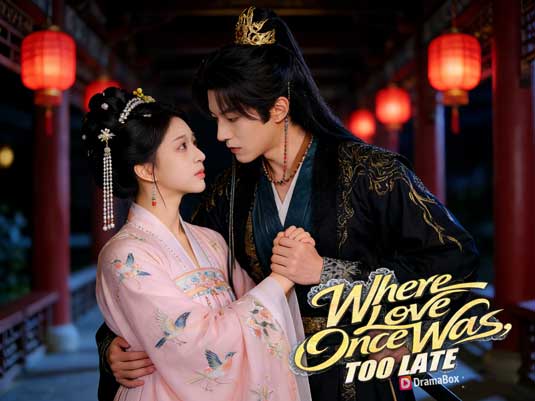
Open DramaBox to watch for free
👰Main Cast
Han Lujin (韩录锦) as Cassidy Zabel
A graduate of Beijing Film Academy, Han delivers a layered performance that balances vulnerability with restraint. Her previous works include Nothing Needs to Be Said and Palace of the Song Dynasty.
Wei Tianhao (魏天浩) as Edmund Spencer
Standing at 185 cm, Wei brings controlled intensity to a role defined by contradiction, portraying both authority and emotional blindness.
Zhang Zhikun (张志坤) as The Emperor
Known internationally for his role in The Battle at Lake Changjin, Zhang lends gravitas and realism to the imperial presence.
Liu Yuze (刘宇泽) as Cassidy’s Brother
Born in 1996, Liu adds complexity to the family dynamic through loyalty strained by power and tradition.
⚔️Storytelling Focus: From Bodyguard to Crown Prince, From Devotion to Distance
Cassidy Zabel grows up believing she understands her world. As the daughter of a respected general, she knows discipline, loyalty, and restraint. Her emotional refuge lies in Edmund Spencer, her personal bodyguard, a man whose silence feels safe and whose presence feels constant. What she does not know is that this man is hiding a crown and a far more dangerous affection.
Edmund’s heart has always leaned toward Marilyn Zabel, Cassidy’s half-sister, a woman whose fragility masks calculation. This emotional imbalance sets the foundation for everything that follows. When Cassidy is falsely accused and thrown into a bandit camp due to Marilyn’s manipulation, the betrayal cuts deeper than physical harm. It confirms that love, when unequal, becomes a weapon.
The turning point comes not with tears, but with resolve. Cassidy chooses survival over longing. She petitions the emperor and accepts a political marriage to Bellaros, stepping into an unfamiliar land where dignity replaces obsession. This choice reframes the entire narrative. Rather than centering the story on Edmund’s regret, the drama shifts perspective to Cassidy’s emotional recovery.
Only after she becomes unreachable does Edmund awaken to his feelings. By then, the palace has moved on, alliances have shifted, and Cassidy has already rebuilt herself in another kingdom. The ancient setting amplifies the tragedy, reminding viewers that in a world ruled by power, personal desire often arrives last.
🧊When Power Wears the Mask of Love
What makes Where Love Once Was, Too Late so unsettling for Western audiences is not the cruelty of its world, but the familiarity of its emotional logic. Strip away the palace walls, the ancient titles, the ceremonial robes, and what remains is a story many viewers recognize instantly: a man who confuses possession with protection, and a woman who learns too late that silence is not loyalty.
Edmund Spencer is introduced as the ideal romantic archetype. He is close but distant, protective but restrained, devoted in action if not in words. For English speaking viewers accustomed to romantic heroes who eventually “wake up,” this setup feels deceptively comfortable. The drama uses that expectation against its audience. Edmund’s love is selective. He acts decisively for Marilyn, hesitantly for Cassidy. His authority as a hidden crown prince does not empower him to love better. It merely amplifies his ability to harm without consequence.
Cassidy’s suffering is not portrayed through spectacle. Instead, the series lingers on small humiliations that resonate deeply with modern viewers. Being disbelieved. Being dismissed as overly emotional. Being told that enduring pain is proof of love. These moments land hard because they mirror real world emotional gaslighting. When Edmund orders her thrown into the bandit camp, the act is not framed as rage or hatred. It is framed as convenience. That choice is far more disturbing.
American audiences, in particular, respond strongly to stories where female agency emerges through refusal rather than confrontation. Cassidy does not demand explanations. She does not stage dramatic accusations. She leaves. Her decision to request a political marriage is radical precisely because it denies Edmund emotional access. The drama understands a truth often overlooked in romance narratives: for some men, loss is the only language that finally registers.
🥀The Marriage That Ends the Fantasy
One of the most compelling shifts in Where Love Once Was, Too Late occurs after Cassidy becomes the wife of Bellaros. In many palace romances, the secondary kingdom functions as a temporary exile, a narrative pause before the heroine is reclaimed. Here, it becomes something else entirely. It becomes the end of the story Edmund thought he was living.
What Western viewers often appreciate is the way the drama reframes marriage not as romance, but as environment. Cassidy’s new life is quieter, steadier, and significantly more respectful. She is no longer required to compete for attention or prove her worth. The absence of chaos becomes its own form of healing. This is a sharp contrast to the palace, where affection is always conditional and surveillance is constant.
Edmund’s attempts to win her back feel intentionally awkward. His gestures are grand but emotionally clumsy. Seeking her mother’s sword is a symbolic act rooted in ancient masculinity. It suggests that redemption can be earned through suffering or sacrifice. The drama refuses to validate that belief. Cassidy’s distance is not cruelty. It is clarity.
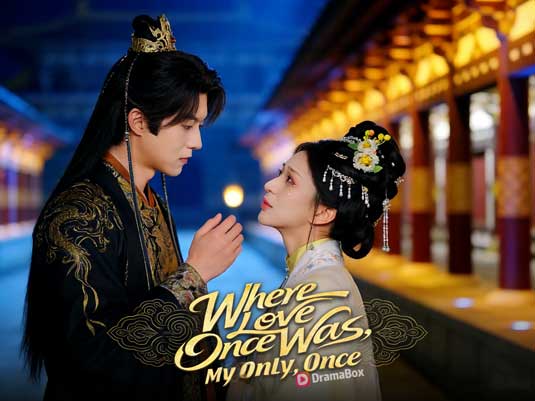
Open DramaBox to watch for free
For English speaking audiences accustomed to redemption arcs, this refusal is bold. The series does not argue that Edmund never loved her. It argues something more uncomfortable: love alone is insufficient without responsibility. By the time he recognizes Cassidy’s value, she has already rewritten her own definition of happiness.
This narrative choice aligns closely with contemporary audience expectations, particularly among women viewers who are increasingly resistant to stories that reward emotional negligence. The drama does not punish Edmund through violence or humiliation. It punishes him through irrelevance. That choice is both modern and deeply satisfying.
🏯A Palace Romance That Refuses to Apologize
What ultimately sets Where Love Once Was, Too Late apart in the crowded landscape of historical Chinese dramas available on DramaBox is its moral restraint. The series never asks viewers to forgive characters prematurely. It trusts the audience to sit with discomfort.
Cassidy is not transformed into a vengeful figure, nor does she become saintly. She simply moves forward. That forward motion is the drama’s quiet triumph. In a genre saturated with revenge plots and emotional reversals, choosing peace becomes the most radical act of all.
Western audiences often gravitate toward narratives where emotional maturity is framed as strength. This drama delivers exactly that. Cassidy’s growth is not explosive. It is cumulative. Each boundary she sets feels earned. Each silence carries meaning. When she finally confronts Edmund, the power dynamic has already shifted. She no longer needs closure. He does.
The palace setting enhances this theme by emphasizing how institutions reward the wrong behaviors. Edmund’s authority protected him when he was careless. It cannot protect him from the consequences of emotional absence. The drama suggests that power without empathy is ultimately hollow.
By refusing to engineer a neat reunion, Where Love Once Was, Too Late honors the intelligence of its viewers. It acknowledges that some loves shape us without belonging to us. Some mistakes cannot be undone, only understood.
For audiences in the United States and other English speaking regions, this restraint feels refreshingly honest. It transforms the series from a simple palace romance into a meditation on timing, accountability, and the quiet dignity of choosing oneself when love arrives too late.
❓Why This Drama Stands Out: Emotional Consequence Over Fantasy
What distinguishes Where Love Once Was, Too Late Chinese Drama from similar palace romance titles is its refusal to excuse emotional negligence. Edmund is not portrayed as evil, but neither is he absolved. His actions carry weight, and the story does not rush to soften them for audience comfort.
Cassidy’s arc is particularly compelling because it resists the genre’s usual temptation to reward suffering with romantic reunion. Her growth is quiet and internal. She learns to value respect over passion, stability over obsession, and selfhood over sacrifice. This counterattack is emotional rather than physical, making it more unsettling and more realistic.
Visually, the drama leans into muted tones and restrained performances. Court scenes feel cold and formal, emphasizing emotional distance. In contrast, moments set in Bellaros are warmer and more grounded, reinforcing Cassidy’s transformation. The camera frequently lingers on silence rather than dialogue, allowing bitterness to breathe.
For English-speaking audiences watching the English Version with English Subtitles, the emotional clarity translates effectively. The drama’s themes of regret, power imbalance, and irreversible choice resonate beyond cultural boundaries, making it accessible as both a historical romance and a universal cautionary tale.
🩸Personal Evaluation: A Love Story That Refuses to Beg Forgiveness
This is not a drama designed to make viewers feel comfortable. It is designed to make them reflect.
Those who seek pure sweetness or guaranteed reunion may find the early episodes heavy. Cassidy endures significant emotional harm, and the palace politics are unapologetically cruel. Yet this discomfort is precisely what gives the story its strength. It respects the audience enough to allow consequences to stand.
The male lead’s regret is portrayed with restraint rather than theatrics. His attempt to reclaim Cassidy through symbolic gestures, including seeking her mother’s sword, feels less like heroism and more like desperation. The drama wisely leaves space for viewers to decide whether redemption is deserved.
Compared to other palace romance series available as a Full Episode or Free Movie on DramaBox, this title feels more mature in tone. It does not rely on constant twists or exaggerated villains. Instead, it trusts emotional realism. Love does not fail because it was fake, but because it was mishandled.
🚪Conclusion: When Love Exists, But the Door Is Already Closed
Where Love Once Was, Too Late Chinese Drama offers a rare narrative honesty within the short drama format. It reminds viewers that timing is not a technicality, but the very foundation of love. When respect arrives too late, affection cannot save what has already broken.
This is a story about growing beyond longing, about learning that peace can exist without closure, and about the quiet dignity of choosing yourself when the world fails to choose you first. In a genre crowded with dramatic reunions, this drama dares to let love remain unfinished.
For viewers seeking a palace romance that values emotional truth over fantasy, this DramaBox release stands as one of the more thoughtful entries in recent Chinese Drama storytelling.