




The Game: Survival of the Salaryman Japanese Drama | When the Office Becomes an Arena [Underdog Rise & Strong Female Lead Short Drama]
Underdog Rise DramaBox
 2026-01-09
 505
505💼👩💼When the Office Becomes an Arena——A Sharp and Addictive Look at The Game: Survival of the Salaryman Japanese Drama
Click here to travel through the dramatic game in [The Game: Survival of the Salaryman] 👈
In recent years, Japanese workplace dramas have moved far beyond quiet realism. They are sharper, darker, and more willing to confront the silent violence embedded in corporate life. The Game: Survival of the Salaryman is a prime example of this evolution. At first glance, it looks deceptively simple. A group of office workers. A meeting room. A familiar childhood game. Yet within minutes, the series reveals itself as something far more unsettling, a psychological survival story that mirrors the anxiety, suppression, and invisible hierarchies of modern working life.
Open DramaBox to watch for free
What makes this short drama stand out on DramaBox is not just its concept, but the precision with which it captures a universal fear shared by salarymen and office workers around the world. The fear of being replaceable. The fear of becoming invisible. The fear that years of loyalty can be erased in a single decision. Unlike many office dramas that focus on romance or everyday struggles, this series dares to turn the workplace into a battlefield where dignity and stability are the ultimate prizes.
The story centers on Jaxon Harper, a marginal employee whose presence barely registers in the corporate ecosystem. He is not a leader, not a rebel, and certainly not a hero in the conventional sense. Yet when a seemingly routine meeting spirals into a brutal competition inspired by Musical Chairs, the drama takes a radical turn. Careers are no longer protected by seniority or obedience. Survival becomes the only metric that matters.
What is striking is how the series frames this game as both absurd and horrifying. The rules are childish, but the consequences are devastating. This contrast gives the drama its emotional power and makes The Game: Survival of the Salaryman Japanese Drama resonate far beyond its short runtime.
Chairs, Silence, and the Cost of Stability
A Storytelling Approach That Cuts Close to Home
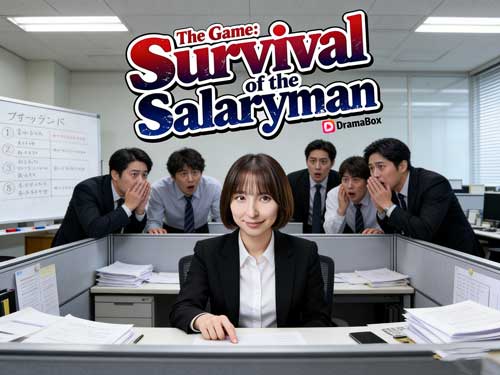
Rather than relying on lengthy exposition, the drama unfolds through carefully controlled tension. Each episode feels like a pressure chamber, compressing fear, ambition, and desperation into tight scenes that rarely allow the viewer to breathe. The meeting room becomes a symbol of corporate confinement, a space where politeness masks cruelty and smiles hide calculation.
The game itself functions as a metaphor. In the corporate world, there are always fewer seats than people who want security. Someone must stand. Someone must fall. This idea is communicated visually and emotionally, without heavy-handed explanation. As the chairs disappear, so does the illusion of safety that defines so many modern workplaces.
Jaxon’s transformation is the emotional core of the series. While his colleagues panic and plead, he responds with something unexpected: excitement. For the first time, the monotony of his life is shattered. Beneath his unremarkable appearance lies a hunger that has long been suppressed by routine and fear. In many ways, he embodies the idea of the underdog rise, a quiet figure discovering power in a system designed to erase him.
This shift is handled with remarkable restraint. The drama does not rush Jaxon into becoming a mastermind. Instead, it lets his expressions, pauses, and decisions reveal a growing sense of control. He is not framed as purely good or evil. He is simply someone who adapts. In this sense, the series avoids moral preaching and allows viewers to confront uncomfortable questions. If survival requires cruelty, how far would you go.
The modern setting amplifies the tension. Open plan offices, corporate jargon, and enforced harmony create a sharp contrast with the brutality of the game. This clash reflects real life experiences familiar to anyone who has worked under rigid hierarchies. The drama subtly critiques systems that reward obedience while punishing individuality, a theme deeply embedded in Japanese corporate culture but increasingly relevant worldwide.
Power, Performance, and Psychological Warfare
Why the Characters and Visual Language Matter
One of the most impressive aspects of The Game: Survival of the Salaryman Japanese Drama is its character design. Each employee represents a recognizable archetype. The loyal veteran who believes years of service guarantee protection. The ambitious climber who thrives on competition. The silent observer who hides sharp instincts behind neutrality. These figures are not exaggerated caricatures. They feel disturbingly real, which makes their reactions all the more compelling.
Jaxon’s role as the chosen one is deliberately ambiguous. He is not selected by fate or authority, but by circumstance and mindset. His ability to detach emotionally gives him an edge, allowing him to turn fear into strategy. This creates a slow burning counterattack against a system that has long marginalized him. What begins as survival gradually takes on the tone of revenge, not in a loud or dramatic sense, but as a quiet reclaiming of agency.
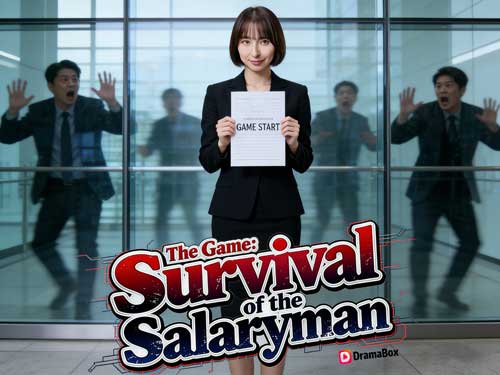
The camera work reinforces this psychological tension. Tight framing emphasizes isolation. Lingering shots on empty chairs create unease. The sound design amplifies silence, making every movement feel significant. There is a deliberate lack of background music during key moments, forcing viewers to sit with discomfort rather than escape it. This minimalist approach aligns perfectly with the drama’s themes.
Open DramaBox to watch for free
Unlike traditional thrillers, the series avoids excessive spectacle. There are no elaborate action scenes or graphic violence. Instead, the true conflict unfolds through glances, decisions, and the slow erosion of trust. This restraint makes the drama feel more intimate and more disturbing. It also enhances its rewatch value, as subtle details become more noticeable with each viewing.
For international audiences, the availability of the English Version with English Subtitles makes the series accessible without diluting its cultural specificity. The cast delivers performances that transcend language barriers, capturing emotions that require no translation. It is easy to see why the Full Episode release on DramaBox quickly attracted attention from viewers seeking intense, thought provoking short dramas.
A Short Drama That Leaves a Long Shadow
Final Thoughts and Why It Is Worth Your Time
What ultimately makes The Game: Survival of the Salaryman Japanese Drama so compelling is its refusal to offer easy answers. It does not celebrate cruelty, nor does it condemn ambition outright. Instead, it presents a mirror. The office is no longer a safe space. It is a microcosm of a world where security is fragile and worth fighting for.
From a personal perspective, the drama succeeds because it understands its audience. It speaks to exhausted workers, overlooked employees, and anyone who has ever felt trapped in a role that offered stability at the cost of meaning. Jaxon’s excitement is unsettling because it is understandable. In a system that drains passion, even danger can feel like liberation.
There are moments when the pacing feels almost too tight, leaving little room for backstory. Some viewers may wish for deeper exploration of secondary characters. However, this restraint also works in the drama’s favor. The focus remains sharp, the tension unbroken. As a Free Movie experience on DramaBox, it delivers far more impact than many longer series.
The fact that this title is a First release on the entire network with Exclusive copyright further highlights DramaBox’s growing influence in the short drama market. Its presence on platforms like YTb has also expanded its reach, drawing global viewers into a uniquely Japanese narrative that feels universally relevant.
In the end, this is not just a story about a game. It is about the invisible rules we live by, the chairs we compete for, and the moments when survival forces us to confront who we really are. If you are looking for a short drama that challenges, unsettles, and lingers long after the screen goes dark, The Game: Survival of the Salaryman Japanese Drama deserves a place on your watchlist.
What would you do when the music stops.