




My Scar, His Debt to Pay Full Movie Watch Online 4K: A Scar That Never Healed Leaves A Mark
Concealed Identity DramaBox
 2026-01-21
 283
283Click here to watch the unforgettable love and farewell in 'My Scar, His Debt to Pay' online👈
💔👩👧When Love Survives War but Fails Peace
Some love stories are born in safety. Others are forged in fire. My Scar, His Debt to Pay belongs firmly to the latter, opening with a war zone that strips romance of fantasy and replaces it with blood, fear, and impossible choices.
Rachel Harrington does not become a heroine by choice. She becomes one because survival demands it. Trapped in conflict alongside Ethan, the man she loves, Rachel makes a decision that defines her entire life. In saving him, she loses part of herself. A scar carves across her face, permanent and visible, marking not only physical injury but the emotional price of devotion.
Their love does not end with rescue. It deepens. Marriage follows quickly, not as a fairy tale, but as an anchor against chaos. Yet war rarely allows neat endings. With only one evacuation seat available, Rachel gives it to Ethan, believing his injuries will otherwise kill him. He promises to return. She believes him.
What he does not know, and what the audience discovers with quiet devastation, is that Rachel is pregnant.
From this moment forward, My Scar, His Debt to Pay Full Movie becomes less about romance and more about consequence. Love exists, but it is fractured by time, silence, and the harsh reality that promises made in war are not always kept in peace.
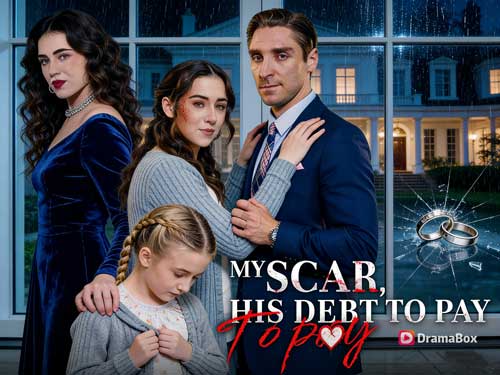
Open DramaBox to watch for free
A Mother’s Choice, A Child’s Secret, and a Life Lived in Shadow
Years later, the story shifts into an urban setting far removed from gunfire but no less unforgiving. Rachel raises her daughter Sophie alone, carrying the weight of absence alongside the responsibilities of motherhood. The scar on her face becomes both shield and stigma, shaping how the world sees her and how she sees herself.
The drama handles motherhood with rare restraint. Rachel is not portrayed as saintly or bitter. She is tired, resourceful, and fiercely protective. Sophie is not a plot device, but a living embodiment of Rachel’s sacrifice. The theme of secret baby unfolds quietly, without melodrama, emphasizing emotional truth over shock value.
Meanwhile, Ethan’s life has moved forward in a way Rachel never imagined. Bound by circumstance and misunderstanding, he has remarried Madeline Rhodes, a woman who represents stability and social acceptance. This is where the story introduces its most uncomfortable question. After losing someone to war, does one owe eternal loyalty to the past, or is moving on an act of survival rather than betrayal?
The series refuses to offer easy answers. Ethan is neither villain nor hero. His choices are shaped by trauma, misinformation, and the belief that Rachel is gone forever. Yet when fate draws them back into the same orbit, buried truths surface with painful clarity.
This is where My Scar, His Debt to Pay Full Movie leans into betrayal not as malice, but as consequence. No one escapes unscathed. Not Rachel, not Ethan, and not the innocent child caught between histories.
The Scar as a Language the World Refuses to Learn
In many love stories, scars are metaphors. In this one, the scar is literal, visible, and relentlessly misunderstood. Rachel Harrington walks through the city carrying a face the world has already judged before she speaks. Strangers avert their eyes. Children stare too long. Adults pretend not to notice and notice anyway. In American and Western storytelling, this kind of visual mark often becomes shorthand for villainy or tragedy. Here, it becomes something far more unsettling. It becomes truth without context.
What makes this arc so compelling is that Rachel never explains her scar unless forced. She does not weaponize it for sympathy. She does not turn it into a badge of honor. She simply lives with it, which in itself becomes an act of resistance. For viewers accustomed to redemption arcs that rely on transformation or concealment, her refusal to hide feels radical. She does not soften herself to make others comfortable. She lets discomfort exist.
This is where the drama taps into something deeply resonant for English speaking audiences. The idea that trauma survivors should either “heal visibly” or “move on gracefully” is quietly dismantled. Rachel’s scar does not fade with time. It does not stop hurting because the war ended. Instead, it becomes a second language she is forced to speak every day, one the world pretends not to understand.
Her motherhood intensifies this tension. When Sophie asks innocent questions about why people stare, Rachel does not give a sanitized answer. She tells her the truth, gently but without apology. This moment lands hard because it reframes beauty not as an aesthetic standard, but as integrity under pressure. The scar becomes a lesson passed down, not as pain, but as clarity.
In American dramas, maternal sacrifice is often glorified to the point of erasure. The mother disappears into selflessness. Here, Rachel remains fully present as a woman. She gets angry. She makes mistakes. She doubts herself. Yet every decision she makes is filtered through one unshakable principle: Sophie will never grow up believing her existence was an accident or a burden.
This is where the story becomes quietly devastating. Rachel does not see herself as heroic. She sees herself as responsible. That distinction is what makes her unforgettable. The scar is not a symbol of what she lost. It is proof of what she chose to protect, even when no one was watching.
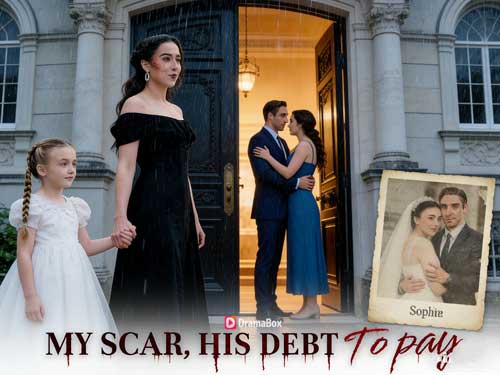
Open DramaBox to watch for free
Open DramaBox to watch for free
If Rachel represents visible consequence, Ethan represents the danger of invisible guilt. When the audience meets him again, years removed from the war, he appears successful, composed, and functional. He has done what society expects. He survived. He rebuilt. He remarried. From the outside, his life looks like progress.
But guilt, in this story, does not announce itself through breakdowns or grand gestures. It lives in silence. It shows up in how Ethan avoids certain memories, certain questions, certain versions of himself. This portrayal feels especially attuned to Western audiences familiar with narratives around veterans, survivors, and men taught to compartmentalize rather than confront.
Ethan genuinely believes he was abandoned by circumstance, not by choice. That belief becomes his emotional armor. It allows him to justify moving forward without fully interrogating what was left behind. His promise to return for Rachel exists in his memory as intention rather than obligation. And intention, the drama argues, is not the same thing as accountability.
The introduction of Madeline complicates this further. She is not cruel. She is not manipulative. She loves Ethan in the way someone loves a man who needs stability more than passion. For American viewers, this creates a familiar discomfort. Madeline represents the life that makes sense, the one built on normalcy and social approval. Rachel represents the life that was earned through blood and fire.
The brilliance of this dynamic lies in its refusal to simplify. Ethan’s love for Madeline is real, but it is also incomplete. His past with Rachel is unfinished, but that does not automatically grant him the right to reclaim it. The drama places him in a moral chokehold with no clean escape.
When Ethan finally learns the truth about Sophie, the moment is not explosive. It is quiet, devastating, and deeply internal. His world does not shatter outwardly. It collapses inward. This restraint makes the scene far more powerful than any confrontation could have been. For English speaking audiences used to emotional spectacle, the stillness feels suffocating in the best way.
The story asks an uncomfortable question: Is regret enough? Or does love demand action, even when action comes too late? Ethan’s debt is not measured in apologies. It is measured in years he cannot give back.
Emotional Architecture: Why the Story Hurts in the Right Way
What elevates this drama beyond familiar tropes is its emotional architecture. The narrative does not rush toward reunion or revenge. Instead, it lingers in moral gray zones where love, guilt, and responsibility collide.
Rachel’s scar functions as a powerful visual metaphor. In scenes where the camera holds on her face, the audience is forced to confront society’s discomfort with visible pain. Her identity becomes partially hidden behind assumptions, reinforcing the theme of hidden identity not as deception, but as self preservation.
Ethan’s arc is driven by debt rather than desire. The title is literal and emotional. He owes Rachel not just an explanation, but a reckoning. This creates a slow burning revenge tension that is more psychological than confrontational. Rachel does not seek punishment. She seeks truth, dignity, and acknowledgment.
The series also examines family bonds with nuance. Madeline is not reduced to a villain. Her presence complicates the narrative ethically, reminding viewers that pain does not cancel responsibility to others. Sophie’s innocence becomes the emotional compass of the story, grounding adult conflict in future consequence.
From a genre perspective, this is a modern romance rooted in realism rather than fantasy. The BG dynamic is layered with time, regret, and unresolved grief, making every interaction between Rachel and Ethan emotionally charged.
For international audiences, the drama’s availability on DramaBox as a Full Episode experience with English Version options and English Subtitles has broadened its reach. Its Exclusive copyright status and First release on the entire network helped spark early attention, with emotional clips circulating on YTb and drawing viewers into the full narrative. For those seeking a Free Movie style experience that prioritizes emotional depth, this series stands out.
Personal Reflection: Love Does Not Always Mean Reunion
As a viewer, My Scar, His Debt to Pay Full Movie is not an easy watch, and that is precisely its strength. It challenges the assumption that love must always be reclaimed to be validated. Sometimes, love is honored through accountability rather than reunion.
Rachel’s greatest act of courage is not surviving war, but choosing how to live afterward. Her journey invites reflection on motherhood as an act of quiet heroism. It also asks whether scars should be hidden, forgiven, or allowed to speak for themselves.
Some viewers may find the pacing deliberate, especially in its refusal to rush emotional closure. Yet this restraint allows the story to resonate long after the final episode. The drama trusts its audience to sit with discomfort and complexity.
Conclusion: Not All Debts Are Paid in Love
In the end, My Scar, His Debt to Pay Full Movie is not simply about romance or regret. It is about responsibility, memory, and the cost of choices made under impossible conditions.
The scar remains. The debt lingers. And love, transformed by time and truth, becomes something quieter but no less powerful.
For viewers drawn to emotionally grounded storytelling that respects intelligence and empathy, this short drama is deeply worth watching.