




A Life That Shines Again Korean Drama Watch Online 4K: When a Woman Stops Begging and Starts Living
Strong Female Lead DramaBox
 2026-01-29
 1071
1071Introduction: The Moment She Chooses Herself
There is a specific kind of heartbreak that does not arrive with shouting or slammed doors. It comes quietly, disguised as a birthday dinner that is not meant for you, a smile that no longer reaches your husband’s eyes, and a family that has already decided you are replaceable. A Life That Shines Again Korean Drama captures this moment with unsettling precision. It tells a story that many viewers recognize instantly, especially those drawn to emotionally grounded Korean short dramas where love fades slowly and regret arrives too late.
What makes this series resonate is not loud confrontation or melodramatic twists. Instead, it focuses on absence. The absence of appreciation. The absence of partnership. The absence of a woman who once held everything together and finally lets go. Streaming on DramaBox with Full Episode access and English Subtitles, this short drama has become a sleeper hit among audiences searching for stories about emotional neglect, self awakening, and the painful cost of indifference.
Unlike many romance driven series that hinge on dramatic revenge or sudden reconciliation, A Life That Shines Again Korean Drama chooses restraint. It asks a harder question. What happens when a woman stops trying to be loved and starts choosing herself instead?
Open DramaBox to watch for free
Cast Spotlight: Faces Behind the Emotions
Lee Sae on as Park Hyeon suk
A South Korean actor, singer, and model, Lee Sae on is known for his roles in Light on Me, Devil Inspector Season 2, CEO dol Mart, and Heo’s Diner. In this series, he delivers a restrained performance that captures the quiet arrogance and delayed remorse of a man who learns too late.
Ahn Yoo jung as Yoon Seo rin
A South Korean actress and influencer, Ahn Yoo jung first gained public attention through Love Catcher in Bali in 2022 and officially debuted as an actress in 2026. Her portrayal of Seo rin is understated, emotionally rich, and deeply relatable.
Kwon Min hyeok as the Second Male Lead
Born in 2003 and debuting in 2019, Kwon Min hyeok brings youthful intensity and contrast to the story. A graduate of Seoul Performing Arts High School, he represents an alternative emotional path within the narrative.
Shin Hee yoon as the Second Female Lead
Shin Hee yoon adds complexity to the family dynamic, embodying the tensions between visibility, favoritism, and emotional power within elite households.
Story Breakdown: Seven Years Given, One Birthday Taken Away
At the heart of A Life That Shines Again Korean Drama is Yoon Seo rin, portrayed with remarkable emotional control by Ahn Yoo jung. For seven years, Seo rin lives as the ideal wife inside a wealthy household. She supports her billionaire husband Park Hyeon suk, manages the unspoken labor of family life, and devotes herself entirely to raising their daughter. Her life revolves around quiet sacrifice, the kind that often goes unnoticed until it disappears.
The story pivots on a devastatingly simple moment. On Seo rin’s birthday, the family throws a celebration, not for her, but for her husband’s half sister. The message is clear without being spoken. Seo rin is no longer at the center of this family, if she ever truly was. There is no explosive argument, no dramatic exit. Instead, Seo rin does something far more powerful. She withdraws.
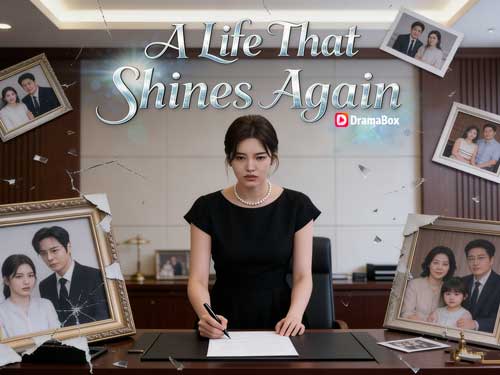
She prepares for divorce in silence. She steps away from the family business. She removes herself emotionally and physically, choosing dignity over confrontation. This narrative choice is what elevates the drama beyond typical modern romance storytelling. The pain is internal, the rebellion subtle, and the consequences irreversible.
As Seo rin disappears from their lives, the husband and family slowly realize the depth of what they have lost. Her absence exposes how much invisible labor she carried. Meals, emotional support, stability, and even the warmth of home vanish with her. The drama explores this realization with an all too late ache that feels painfully realistic.
Throughout the episodes, themes of bitter love, love after divorce, and the quiet strength of an independent woman unfold naturally. The story does not rush toward forgiveness or winning her back. Instead, it lets regret sit uncomfortably, forcing viewers to question whether love that awakens only after loss deserves a second chance.
The Birthday That Changed Everything: When Silence Screams Louder Than Words
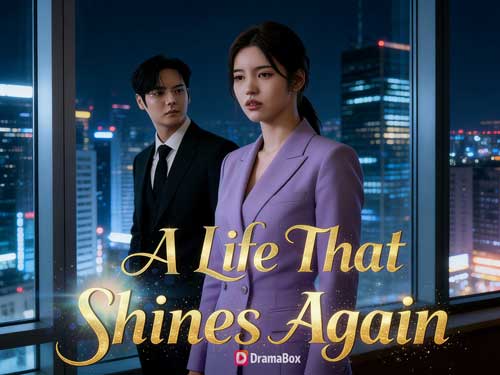
There is a moment in A Life That Shines Again that feels tailor made for American and other English speaking audiences who love emotionally charged drama without excessive theatrics. It is not a courtroom showdown or a slap across the face. It is a birthday. A table set with candles. A cake that is not hers. A celebration where Yun Seo rin stands slightly off to the side, smiling politely while realizing, in real time, that she has already been erased from her own life.
This scene hits especially hard because it mirrors a very universal experience: being physically present while emotionally excluded. For viewers raised on Western family dramas and prestige TV, this moment lands with the same quiet devastation as a well written scene in Marriage Story or Big Little Lies. Nobody raises their voice. Nobody says anything cruel out loud. And yet, everything has already been said.
What makes this sequence so compelling is how the show trusts the audience. Seo rin does not confront her husband Park Hyeon suk. She does not storm out. She watches. She notices how easily her place has been taken by his half sister. She sees how her daughter’s attention has already shifted. The camera lingers on small details that English speaking viewers tend to appreciate: the way Seo rin’s hands tighten slightly, the way her smile freezes for half a second too long, the way the room seems to shrink around her.
This is where the drama makes a bold choice. Instead of pushing the story into immediate conflict, it leans into emotional realism. In many American relationship stories, the turning point is explosive. Here, the turning point is internal. Seo rin decides something that will change the trajectory of every character involved. She decides to stop asking to be chosen.
For Western audiences, especially women who are used to stories about emotional labor and invisible work, this resonates deeply. Seo rin has been the glue holding everything together. She managed the household, supported her husband’s career, and raised their child. Yet none of these contributions are acknowledged. The birthday scene becomes a symbol of how easily society overlooks care work when it is done quietly and consistently.
Open DramaBox to watch for free
This episode also subtly sets up the show’s central tension. It is not about whether the husband will regret his choices. It is about whether regret matters once someone has already walked away. That question lingers long after the scene ends, making viewers click into the next episode not out of curiosity, but out of emotional investment.
Walking Away Without Burning the House Down: A Different Kind of Power
One of the most refreshing aspects of A Life That Shines Again is how it portrays strength. For audiences in the US, UK, Canada, and Australia who have grown tired of over the top revenge fantasies, Seo rin’s approach feels surprisingly modern. She does not destroy her husband’s company. She does not publicly expose family secrets. She simply leaves, and in doing so, takes everything that truly mattered with her.
This narrative choice aligns beautifully with contemporary conversations about boundaries, self respect, and emotional autonomy. Seo rin’s decision to quietly prepare for divorce is not passive. It is strategic. She withdraws from the family business, steps away from social obligations, and slowly detangles herself from a life that has taken her for granted. The brilliance lies in how the show frames this withdrawal as an act of reclamation rather than defeat.
For English speaking viewers, especially those familiar with stories of women “starting over,” Seo rin’s journey feels deeply relatable. Think of films and series where female characters rediscover themselves after long marriages. What A Life That Shines Again adds is cultural nuance. Seo rin is not encouraged to leave. There is no supportive friend cheering her on. She makes this choice alone, which gives it a quiet gravity.
The fallout is where the drama truly shines. Once Seo rin is gone, the household begins to unravel. Meals are skipped. The daughter becomes distant. The husband realizes he does not know how to manage emotional intimacy or daily life without Seo rin smoothing everything over. These moments are played with restraint, which makes them even more effective. Regret does not arrive as a dramatic monologue. It arrives in empty rooms and unanswered messages.
American audiences often respond strongly to stories where consequences unfold slowly and realistically. This is not instant karma. It is delayed recognition. By the time Park Hyeon suk begins to understand what he has lost, Seo rin has already moved emotionally beyond him. This imbalance creates a powerful tension that fuels the latter half of the drama.
Importantly, the show resists framing Seo rin’s independence as cold or selfish. She still loves her daughter. She still feels the weight of her choices. But she no longer sacrifices her entire identity to maintain a family that refuses to see her. This portrayal of womanhood, where self preservation is not villainized, feels especially resonant for modern Western viewers navigating similar themes in their own lives.
Why It Works: Performances, Direction, and Emotional Precision
One of the strongest elements of A Life That Shines Again Korean Drama is its commitment to character driven storytelling. Ahn Yoo jung’s Seo rin is not written as a tragic victim nor as an exaggerated strong female lead archetype. Her strength lies in restraint. Her expressions do the heavy lifting. A lowered gaze. A quiet pause before answering. A calm decision that feels heavier than any scream.
Lee Sae on delivers a layered performance as Park Hyeon suk, a man shaped by privilege, emotional blindness, and societal expectations. Known for roles in Light on Me and CEO dol Mart, Lee brings subtlety to a character who could easily have become a one dimensional villain. His portrayal allows viewers to understand how neglect can stem from entitlement rather than cruelty, making his eventual regret more believable and more painful.
The supporting cast adds further texture. Kwon Min hyeok as the second male lead introduces tension that never turns melodramatic, while Shin Hee yoon’s role as the female counterpart reflects the contrast between visibility and value within the family dynamic. Each character serves as a mirror, reflecting different responses to power, affection, and abandonment.
Visually, the series leans into clean, modern aesthetics. Office spaces feel cold and expansive, emphasizing emotional distance, while domestic scenes are framed in ways that highlight isolation rather than comfort. The camera often lingers on empty rooms after Seo rin leaves, reinforcing the theme that her presence was the emotional backbone of the household.
The pacing suits the short drama format perfectly. Each Full Episode feels complete while still encouraging the next, making it ideal for viewers who enjoy a Free Movie style binge experience. Released as a First release on the entire network under DramaBox’s Exclusive copyright, the drama maintains consistent quality from start to finish.
Personal Take: Not a Revenge Fantasy, But a Reality Check
What sets A Life That Shines Again Korean Drama apart from similar billionaire romance stories is its refusal to romanticize neglect. This is not a fairy tale about instant redemption. It is a sober reflection on how easily love is taken for granted and how difficult it is to rebuild trust once it is broken.
Some viewers may find the lack of dramatic confrontation frustrating. There are no screaming matches or public humiliations. Instead, the drama opts for emotional realism. For many, this will feel more honest. For others, it may feel unresolved. But that discomfort is precisely the point.
Seo rin’s journey is not about proving her worth to those who failed her. It is about reclaiming her identity beyond marriage and motherhood. In that sense, the drama speaks directly to modern audiences who resonate with stories of self worth, boundaries, and emotional independence.
If there is a critique, it lies in the limited exploration of Seo rin’s life after leaving. Some viewers may wish for more scenes that fully showcase her transformation outside the family sphere. Still, the emotional arc remains satisfying, especially for those who appreciate slow burn narratives.
Whether watched in the English Version or with English Subtitles, the drama transcends language barriers through its universal themes. It fits seamlessly into the growing global appetite for Korean short dramas that prioritize emotional depth over spectacle.
Conclusion: When Light Returns, It Does Not Ask for Permission
A Life That Shines Again Korean Drama is not about revenge. It is about clarity. It reminds viewers that love should not require erasure and that sometimes the bravest act is leaving without demanding acknowledgment. By the time the family realizes Seo rin’s worth, she has already stepped into a life defined by choice rather than obligation.
For audiences drawn to modern romance stories with emotional intelligence, this drama offers a deeply satisfying experience. It invites discussion rather than dictating answers. Should forgiveness follow regret? Can love survive neglect? Or is some loss meant to teach rather than restore?
One thing is certain. Seo rin’s life does shine again, not because others finally see her, but because she sees herself.