




Stepmom's Guide to Winning Big Chinese Drama Full Movie 4K: When a “Useless” Stepmom Turns Survival Into a Strategy
Time Travel DramaBox
 2025-12-24
 580
580👩⚕️🌿Stepmom's Guide to Winning Big Chinese Drama + Full Cast: When a “Useless” Stepmom Turns Survival Into a Strategy
Click here to watch full movie online and get more information👈
💪Introduction | The Most Unexpected Heroine Is a Stepmother
In many period dramas, stepmothers are written as villains by default. They are cold, calculating, or cruel. This is exactly why Stepmom's Guide to Winning Big Chinese Drama feels refreshing from its very first episode.
Instead of asking how a woman survives palace intrigue or wins the heart of a powerful man, this drama asks a quieter but far more interesting question. What happens when a capable modern woman wakes up in a body society has already dismissed as worthless?
The answer is not instant dominance or glamorous revenge. It is patience, intelligence, and emotional labor. This series frames success not as conquest, but as rebuilding. That choice alone sets it apart from many time travel stories currently flooding the short drama market.
This review explores how Stepmom's Guide to Winning Big Chinese Drama blends everyday survival, maternal bonds, and romance into a story that feels both comforting and quietly empowering.
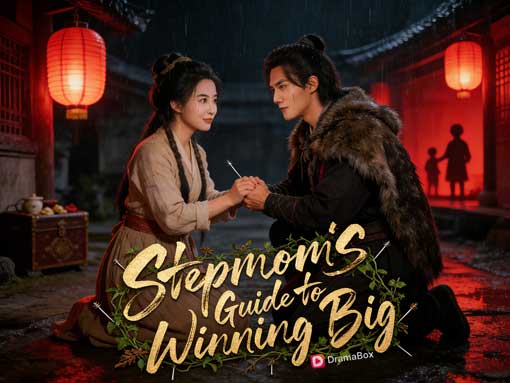
Open DramaBox to watch for free
🩺Story Overview | Healing Hands in a Harsh World
Winda Sade was once a brilliant medical professional. After transmigrating into the past, she becomes an idle village woman with a terrible reputation and no social power. She inherits not only poverty, but suspicion, resentment, and the role of a stepmother to two wounded children.
The setting of ancinet China is not romanticized here. Life is physically demanding, resources are scarce, and social judgment is unforgiving. Winda’s first victories are small. Treating injuries. Earning trust. Feeding a family without relying on miracles.
Her partnership with Carver Lawson, a skilled hunter burdened by responsibility, grows slowly. Their bond is not built on dramatic confessions but shared survival. Together they face illness, poverty, and threats from those who benefit from Winda’s failure.
What drives the story forward is Winda’s quiet counterattack against fate. She does not seek power through schemes. She uses knowledge. Medicine becomes her currency. Healing earns respect. Respect creates opportunity. Wealth follows naturally.
As Carver rises to protect their land and people, Winda stands beside him not as decoration, but as a strategist and healer. Their relationship deepens organically, evolving into romance and sweet love without undermining Winda’s independence.
👨👩👧👦Main Cast Introduction
Lei Yihao as Carver Lawson
Born on October 19, 1995, in Zhejiang, Lei Yihao graduated from the Central Academy of Drama. His representative works include Battle Angel, Time Buyer, Unexpected Banquet, Mountain and River Werewolf, Life’s Long Regret Like Eastward Flowing Water, and Dawn Dusk Line. He brings steadiness and restraint to the role of Carver.
Zhang Chuxuan as Winda Sade
Born on November 9, 1996, Zhang Chuxuan graduated from Sichuan Film and Television Institute. Her works include Why Did the Young General Provoke Me, Mr. Huo’s Substitute Wife, and Flash Marriage Spoiled by Mr. Fu. Her portrayal of Winda balances intelligence, warmth, and resilience.
Xi Wenjun as the Female Antagonist
Xi Wenjun is a mainland Chinese actress known for Dad Is Setting Off, The Virtuous Son in Law, Medical Consort’s Cultivation Manual, and Broken Jade Bearing Favor. Her performance adds emotional friction and narrative tension.
Quan Meihua as Mrs. Liang
Quan Meihua is a Korean Chinese actress born in Jilin City, Jilin Province. Her works include Snake Island Survival and multiple popular short dramas. She brings authority and complexity to the role of Mrs. Liang.
🌾Why It Works | Detail, Performance, and Emotional Logic
One of the most praised elements of Stepmom's Guide to Winning Big Chinese Drama is its attention to detail. Injuries matter. Consequences linger. When a child is hurt, their recovery is reflected realistically in later episodes. This commitment to continuity grounds the story and rewards attentive viewers.
Zhang Chuxuan’s portrayal of Winda Sade avoids exaggeration. Her strength is internal. She reacts before she performs. This makes her victories feel earned rather than scripted. Her maternal bond with the children feels lived in rather than symbolic.
Lei Yihao’s Carver Lawson complements this energy well. His character is protective but not domineering. He respects Winda’s abilities without needing to control outcomes. Their partnership feels balanced, which enhances the emotional credibility of the romance.
The antagonist, portrayed by Xi Wenjun, succeeds precisely because she is believable. Her actions provoke frustration rather than disbelief. Audience reactions show that viewers enjoy hating her while recognizing the moral complexity she introduces.
From a production standpoint, the drama uses natural lighting, grounded costumes, and restrained camera work. It prioritizes storytelling over spectacle, which suits its slice of life pacing.
International viewers benefit from accessibility. Available on DramaBox as a Full Episode viewing experience, the series can be watched as a Free Movie with English Version and English Subtitles. Its First release on the entire network and Exclusive copyright status have helped it reach audiences on platforms like YTb, especially those searching for comforting Chinese Drama narratives with time travel elements.
🔥From Nobody to Game Changer, Why This Drama Hooks Western Viewers Fast
What makes Stepmom’s Guide to Winning Big instantly addictive for American audiences is not just its time travel premise, but the emotional fantasy it fulfills with almost surgical precision. Winda Sade does not arrive in ancient China as a chosen queen or a blessed heroine. She wakes up inside the body of a woman society has already written off. She is mocked as lazy, despised as unattractive, and distrusted as a stepmother. For viewers raised on underdog narratives and glow up arcs, this setup lands hard. It echoes familiar Western storytelling rhythms where the protagonist must first survive public humiliation before earning power.
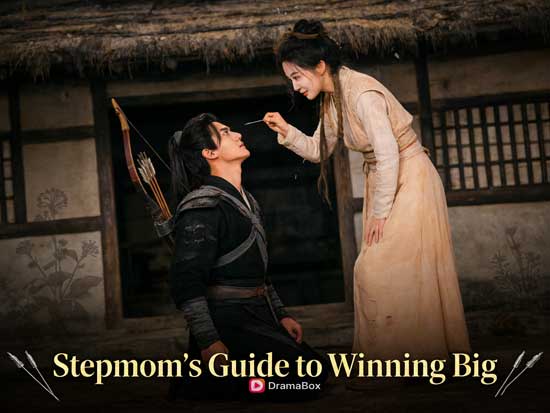
Open DramaBox to watch for free
The genius twist is that Winda’s greatest weapon is not physical strength or noble birth, but knowledge. As a medical prodigy from a modern world, she understands anatomy, hygiene, triage, and long term care. These skills become revolutionary tools in a village where illness is usually treated with superstition or resignation. American viewers tend to love competence driven protagonists, especially women who win through intelligence rather than brute force. Watching Winda diagnose fevers, set bones, and save children feels like watching a quiet superhero story unfold.
Her relationship with Carver Lawson deepens this appeal. Carver is introduced as the classic stoic hunter, emotionally reserved, capable, and protective. He embodies a rugged masculinity that resonates strongly with U.S. audiences familiar with frontier archetypes and survival dramas. Yet what sets him apart is that he does not feel threatened by Winda’s intelligence. Instead, he listens, adapts, and eventually becomes her most steadfast ally. Their bond grows not through dramatic confessions, but through shared labor, trust, and moments of mutual respect. This slow burn dynamic aligns well with American viewers who increasingly favor emotional authenticity over exaggerated melodrama.
Another surprisingly powerful hook lies in the children. Rather than using them as decorative plot devices, the series treats their injuries, trauma, and emotional scars with realism. One child’s prolonged recovery quietly shapes the pacing of the story. Scenes are adjusted, movement is limited, and attention shifts to caregiving. This level of detail feels grounded and human. For U.S. audiences accustomed to prestige TV realism, these choices elevate the drama beyond standard short form storytelling.
At its core, Stepmom’s Guide to Winning Big sells a fantasy that resonates deeply in the American cultural imagination: if you are smart enough, kind enough, and brave enough to act, you can rebuild your life anywhere, even in a world that was never designed for you.
💞Love, Power, and Domestic Revolution in a World That Underestimated Her
While the surface narrative of Stepmom’s Guide to Winning Big centers on survival and prosperity, the deeper emotional current revolves around domestic power. Winda’s transformation is not about overthrowing an empire overnight. It is about redefining what authority looks like inside a household. This theme lands especially well with American audiences who value stories of private empowerment as much as public victory.
In many episodes, Winda’s greatest battles are fought at home. She negotiates food shortages, medical emergencies, village gossip, and the emotional resistance of children who are unsure whether to trust her. Her growth feels earned because it unfolds through repetition and resilience. Each meal she prepares, each wound she treats, and each boundary she sets builds toward a quiet revolution. She does not demand respect. She constructs it piece by piece.
Carver’s arc complements this journey beautifully. Rather than dominating the narrative, he evolves alongside her. His combat skills and hunting expertise serve the external plot, but his willingness to learn from Winda reshapes the emotional core of the series. When he supports her decisions publicly, especially against skeptical elders or antagonistic rivals, the show delivers a deeply satisfying reversal of patriarchal expectations. American viewers, particularly those drawn to progressive romance narratives, will recognize this as a modern relationship model dressed in historical costume.
The antagonists also deserve attention. The female rival characters are written with enough depth to spark debate rather than simple hatred. Their resentment stems from scarcity, fear, and internalized hierarchy. This complexity allows viewers to question easy moral binaries. Some audience reactions even point out that Winda’s success unintentionally destabilizes the existing social order, creating consequences she must confront. This moral ambiguity adds texture and invites discussion, something U.S. audiences increasingly seek in serialized content.
Perhaps the most audacious aspect of the series is its willingness to lean into imaginative freedom. Once viewers accept the time travel premise, the story allows itself to explore unconventional ideas, including medical practices that border on the absurd and social dynamics that stretch realism. Instead of breaking immersion, these moments reinforce the genre’s playful confidence. For American fans of speculative fiction, this blend of grounded emotion and creative risk feels refreshing.
By the time romance fully blossoms between Winda and Carver, it feels less like destiny and more like a partnership forged under pressure. Love here is not a rescue fantasy. It is a mutual recognition between two people who have survived, adapted, and chosen each other with clear eyes.
🧠Personal Perspective | Comfort Drama With a Brain
What makes Stepmom's Guide to Winning Big Chinese Drama particularly enjoyable is its emotional tone. It is gentle without being dull. Empowering without being preachy. The drama respects domestic labor, caregiving, and intelligence as forms of strength.
Compared to other time travel stories that rely heavily on shock value, this one allows imagination to flourish naturally. Even its more outrageous ideas feel grounded in character logic, which explains why viewers find it fun rather than absurd.
The pacing may feel slow to those expecting constant conflict, but for many viewers, that slowness is a feature. It creates space for emotional investment. It makes victories satisfying. It turns everyday survival into narrative reward.
This drama is best suited for audiences who enjoy family centered stories, gradual romance, and female leads who win not by domination but by competence.
🔚Conclusion | Winning Big Is Not About Power, but Belonging
At its core, Stepmom's Guide to Winning Big Chinese Drama is not about conquering the world. It is about carving out a place where kindness, intelligence, and effort matter.
Winda Sade’s journey reminds viewers that success does not always arrive with applause. Sometimes it comes quietly, in healed wounds, full bowls, and children who finally sleep without fear.
For anyone looking for a warm, thoughtful Chinese Drama that blends time travel, family, and romance into a satisfying short drama experience, this DramaBox original is well worth the watch.